
Visual Annotation
БесплатноНе проверенA Model Context Protocol server that lets an LLM open web pages, list interactive elements, take screenshots, and draw annotations with color contrast selection

Описание
A Model Context Protocol server that lets an LLM open web pages, list interactive elements, take screenshots, and draw annotations with color contrast selection.
README
A Model Context Protocol server that lets an LLM open web pages, list the interactive elements on them, take screenshots, and draw annotations — circles, ellipses, rectangles, arrows, and labeled text boxes — with heuristic color contrast selection and optional background blur.
Built on top of Playwright (headless Chromium) and Pillow.
What it does
Given a URL, the server exposes a small set of tools that together form a simple workflow:
navigate → inspect_elements → highlight_element → (annotate_last_image)
navigate— open a URL in a headless Chromium.inspect_elements— return JSON for visible interactive and form elements (links, buttons, input/textarea/select, etc.) with stable ids (e0,e1, ...), text/aria metadata, DOM metadata, coverage status, and CSS bounding boxes.click_element/fill_element/press_key/wait_for_url— interact with the page to dismiss blockers, fill fields, and move between steps.- Convenience tools —
click_by_text,fill_by_selector, anddismiss_common_popupsfor quick interaction without a prior element id. highlight_element— screenshot a region around an element by id and draw an annotation on it. The crop is automatically expanded to include a few nearby interactive elements so the viewer has visual context.screenshot_viewport/screenshot_element— raw screenshots with no annotation.annotate_last_image— draw additional shapes/labels on the image produced by the previous tool call, so annotations can be stacked.run_flow— run a JSON list of steps for repeatable multi-step journeys (for example: signup, onboarding, checkout).
Why One Server
This project intentionally combines three related capabilities in one MCP server because they all depend on the same browser session state:
- Page automation (navigate, click, fill, waits).
- Visual capture (viewport/element screenshots).
- Annotation rendering (highlights, arrows, labels).
Keeping them together avoids cross-process handoff overhead, reduces state drift, and allows one deterministic workflow from interaction to final image.
run_flow is included as an optional server-side macro for deterministic
replays (CI, smoke, scripted journeys). Agent-led orchestration remains the
preferred path for exploratory reasoning-heavy tasks.
All shape drawing, color resolution, and image effects live in
visual_annotation_mcp/annotate.py and can be used as a normal Python library
independent of the MCP server.
Features
Shapes
circle/ellipse— an aspect-ratio ellipse sized to fully enclose the element's bounding box (no more "red dot in the middle of a wide link").rectangle— bounding rectangle with a small margin.arrow— line with a filled arrowhead, pointing at the element from whichever nearby edge (top / bottom / right / left) actually fits in the cropped image.text— standalone text box; also available as alabelparameter on any of the above shapes.
Dynamic crop context
The crop around the target is grown to include the N nearest interactive
elements (by bounding-box edge distance) so the viewer can orient themselves.
Oversized container links (>50% of the viewport in either dimension) are
excluded so one giant hero-banner link can't bloat the crop. min_context is
tunable per call:
min_context |
Use case |
|---|---|
0 |
Tight crop, element only |
3-5 |
Compact reference |
6-10 |
Default (6) — generous reference |
12-20 |
Wide overview |
Smart color resolution
color="auto" (the default) uses a preferred-with-fallback model:
- The annotation color defaults to
prefer_color="red". - Before drawing, the surrounding pixels are sampled. If the Euclidean RGB
distance from the average surround to the preferred color is at least
min_contrast(default140), the preferred color is used. - Otherwise the system falls back to the palette color (red, lime, blue, yellow, magenta, cyan) with the greatest distance from that average — e.g. on target.com's red header strip, preferred red falls back to cyan.
- Passing an explicit color (
color="#00ff00",color="lime", etc.) bypasses the fallback entirely. prefer_coloraccepts any CSS color string, so users can say "always circle in lime" while still getting automatic contrast correction.
Important: this uses Euclidean RGB distance as a pragmatic visibility heuristic. It is not a WCAG 2.x luminance contrast-ratio implementation and should not be presented as WCAG-compliant accessibility scoring.
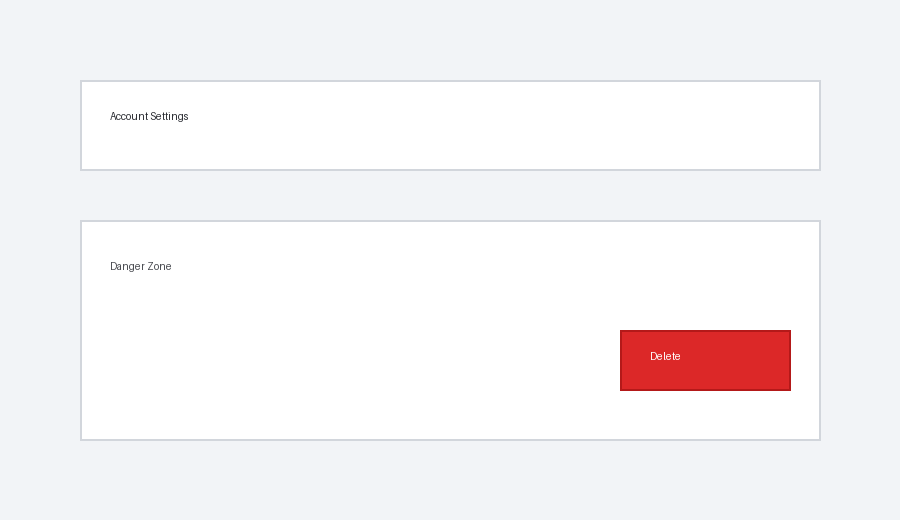
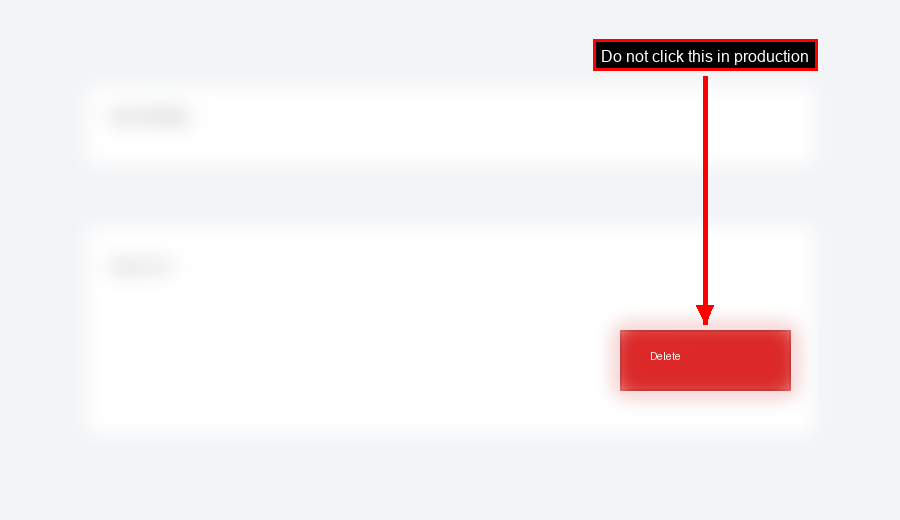
Visual Example
Before:
After:
Labels
label="Click here" draws a bordered text box near the element. The fill and
text colors are picked automatically for legibility against whatever pixels
sit under the label (light-on-dark or dark-on-light), and the border matches
the shape's resolved color. label_position can be auto (bottom → top →
right → left), or pinned to any side.
Background blur
blur_background=True applies a feathered Gaussian blur to everything
outside the target's bounding box, leaving the element sharp. Good for
"which button is X" style screenshots where the rest of the page is noisy.
Delivery roadmap
- Sprint execution plan:
docs/SPRINT_EXECUTION_PLAN.md - Ticket backlog:
docs/sprints/BACKLOG.md - Acceptance matrix:
docs/sprints/ACCEPTANCE_MATRIX.md - Risks and release gates:
docs/sprints/RISKS_AND_GATES.md - Swarm planning notes:
docs/sprints/SWARM_NOTES.md - Flow v2 contract:
docs/sprints/FLOW_V2_CONTRACT.md - Sprint 6 closeout:
docs/sprints/SPRINT6_CLOSEOUT.md - Operations runbook:
docs/OPERATIONS.md - Release notes and migration guidance:
docs/RELEASE_NOTES_AND_MIGRATION.md - Changelog:
CHANGELOG.md
Release Readiness Gates
For local pre-release verification:
python -m pip install -e .[dev]
ruff check visual_annotation_mcp tests/test_flow_contracts.py tests/test_flow_executor.py tests/test_observability.py tests/test_security.py
ruff check tests/test_contrast.py tests/test_arrow_label_placement.py
pydocstyle visual_annotation_mcp
mypy visual_annotation_mcp
coverage run -m unittest discover -s tests -p "test_*.py"
coverage report
python tests/smoke_test.py
pip-audit --ignore-vuln CVE-2026-1703
Installation
From PyPI (recommended)
pip install visual-annotation-mcp
visual-annotation-mcp-install-browsers   # downloads headless Chromium
The second step is required once per machine: pip installs the Python
package but not the browser binary Playwright needs. It's equivalent to
python -m playwright install chromium but discoverable from the installed
console scripts.
Python 3.11+ is required.
From source (for development)
git clone https://github.com/mstocker1/Visual_Annotation_MCP
cd Visual_Annotation_MCP

python -m venv .venv
# Windows
.venv\Scripts\pip install -e .
.venv\Scripts\visual-annotation-mcp-install-browsers
# macOS / Linux
source .venv/bin/activate
pip install -e .
visual-annotation-mcp-install-browsers
Wiring it into Claude Code
The repo ships with a project-scoped .mcp.json:
{
  "mcpServers": {
    "visual-annotation": {
      "type": "stdio",
      "command": "${VISUAL_ANNOTATION_PYTHON:-python}",
      "args": ["-m", "visual_annotation_mcp"],
      "env": {}
    }
  }
}
Open this repo in Claude Code and approve the project MCP server when
prompted. Run /mcp to confirm visual-annotation is connected.
If python isn't on the GUI PATH (common on Windows)
Any of these work:
- Set
VISUAL_ANNOTATION_PYTHONto the venv interpreter before starting Claude Code (e.g.C:\path\to\repo\.venv\Scripts\python.exe). - Replace
commandin.mcp.jsonwith that full path directly. - On Windows, point
command/argsatpowershell+scripts\run_visual_mcp.ps1. On macOS/Linux usescripts/run_visual_mcp.sh.
The bundled helper scripts prefer the repo's .venv automatically.
First launch can be slow
The first call that needs a browser downloads and launches Chromium. If Claude Code times out the MCP handshake, start it with a higher startup timeout, e.g.
MCP_TIMEOUT=120000 claude
Running without Claude
The package also runs as a standalone MCP stdio server:
python -m visual_annotation_mcp
For end-to-end verification without any MCP client at all, run the smoke test:
python tests/smoke_test.py
It exercises every shape, the label, the blur effect, the contrast fallback,
annotate_last_image stacking, and raw screenshots against an in-memory
data URL. It exits non-zero on any assertion failure.
Test Strategy
This repository uses Python's built-in unittest as the single test runner.
Test files are still named test_*.py for compatibility with discovery tools,
but all canonical commands use unittest discovery.
Core annotation behavior now has dedicated fast unit tests in:
tests/test_contrast.pytests/test_arrow_label_placement.py
Tool reference
navigate(url, wait_until="load")
Go to a URL (HTTP/S only). Clears element ids from any previous inspect_elements.
inspect_elements(wait_timeout_ms=5000)
Return JSON with every visible link, button, role="button", role="link",
role="menuitem", input/textarea/select controls, and contenteditable
elements on the current page. Each entry has id, tag, text,
aria_label, role, href, dom_id, name, placeholder,
is_covered, and box_css (x, y, width, height in CSS pixels).
wait_timeout_ms lets dynamic pages finish rendering controls before the
snapshot is taken.
screenshot_viewport(full_page=False)
Capture the current viewport (or the full scrolling page when full_page=True)
as a PNG.
screenshot_element(element_id, wait_timeout_ms=8000)
Tight PNG screenshot of a single DOM element by id.
Before capture, the element is waited until actionable: visible, stable, scrolled into view, and not center-covered by another element.
click_element(element_id, wait_timeout_ms=8000, post_wait_ms=250, button="left")
Click an element id from inspect_elements. Before clicking, the target is
waited until actionable (visible, stable, scrolled into view, not covered at
its center point).
click_by_selector(selector, wait_timeout_ms=8000, post_wait_ms=250, button="left")
Click the first actionable element matched by a CSS selector.
click_by_role(role, name="", wait_timeout_ms=8000, post_wait_ms=250, exact=False)
Click the first actionable element matched by accessible role and optional accessible name.
fill_element(element_id, text, wait_timeout_ms=8000, clear_first=True)
Fill a text-like control (input/textarea/contenteditable) by inspected id.
fill_by_label(label, text, wait_timeout_ms=8000, clear_first=True, exact=False)
Fill a field using associated label text.
click_by_text(text, wait_timeout_ms=8000, post_wait_ms=250, exact=False, case_sensitive=False)
Click the first actionable interactive element whose text, aria-label, value, or title matches the supplied string.
fill_by_selector(selector, text, wait_timeout_ms=8000, clear_first=True)
Fill an input-like control selected by CSS selector without requiring an
inspect_elements id.
dismiss_common_popups(wait_timeout_ms=8000, max_clicks=3)
Best-effort modal/cookie dismiss helper. Tries common labels (accept,
agree, close, dismiss, etc.) and close-icon selectors.
detect_blockers(max_candidates=8, min_area_ratio=0.08)
Return JSON metadata for likely viewport blockers (modals/overlays), including z-index, area ratio, and CSS box coordinates.
dismiss_overlay(selector=None, strategy="auto", wait_timeout_ms=8000)
Dismiss overlays by selector or automatic close strategies (auto, esc,
click).
close_cookie_banner(wait_timeout_ms=8000)
Best-effort helper to close cookie banners via common text labels and selectors.
press_key(key, delay_ms=0)
Send a key press to the active page (Enter, Escape, Tab, etc.).
wait_for_url(url_contains, timeout_ms=10000, wait_until="load")
Wait for URL transitions between flow steps, including hash changes.
wait_for_selector(selector, timeout_ms=10000, state="visible")
Wait for a selector to reach attached, detached, visible, or hidden.
wait_for_text(text, timeout_ms=10000, exact=False, selector=None)
Wait for text to become visible globally, or scoped under a selector.
assert_element_exists(selector=None, element_id=None)
Assert that an element exists (selector or inspected id required).
assert_element_visible(selector=None, element_id=None, wait_timeout_ms=8000)
Assert that an element is visible/actionable.
assert_text_contains(text, selector=None, case_sensitive=False)
Assert that given text exists on page or within selector scope.
assert_url_matches(pattern, regex=False)
Assert that current URL contains a pattern or matches regex.
extract_element(selector=None, element_id=None, attributes=None, include_text=True)
Extract one element's structural data (tag/id/role/text/attrs/bbox).
extract_form_data(selector="form")
Extract key/value data from form fields inside a form selector.
extract_table(selector)
Extract table headers and row objects from a table selector.
extract_page_model()
Extract lightweight page model: headings, landmarks, forms, interactive count.
select_option(selector=None, element_id=None, value=None, label=None, index=None, wait_timeout_ms=8000)
Select option(s) in a <select> by value, label, or index using either
selector or element id.
check_uncheck(checked=True, selector=None, element_id=None, wait_timeout_ms=8000)
Check or uncheck a checkbox/radio using selector or element id.
submit_form(selector=None, element_id=None, wait_timeout_ms=8000, post_wait_ms=250)
Submit a form target by form selector/id or via submit-capable control click.
upload_file(file_path, selector=None, element_id=None, wait_timeout_ms=8000)
Upload a local file to a file input using selector or element id.
highlight_element(element_id, ...)
Screenshot a region around an element and draw an annotation on it.
| Parameter | Default | Description |
|---|---|---|
element_id |
— | Id from a previous inspect_elements call. |
padding |
16 |
Extra pixel margin around the computed crop. |
style |
"circle" |
circle, ellipse, rectangle, arrow, or text. |
min_context |
6 |
Include at least this many nearby interactive elements in the crop. |
wait_timeout_ms |
8000 |
Max wait for actionable target (visible, stable, in-view, not covered). |
color |
"auto" |
"auto" for preferred-with-fallback, or any CSS color to force. |
prefer_color |
"red" |
Preferred color for auto mode; any CSS color. |
min_contrast |
140 |
RGB distance threshold before the auto picker falls back to the palette. |
label |
None |
Optional text drawn in a bordered text box near the element. |
label_position |
"auto" |
auto / top / bottom / left / right. |
blur_background |
False |
Gaussian-blur everything outside the element's bbox. |
stroke_width |
4 |
Shape outline width in pixels. |
annotate_last_image(x, y, width, height, ...)
Draw an additional annotation on the image from the previous call, at the
given pixel bounding box. Accepts all of the visual parameters above
(style, color, prefer_color, min_contrast, label, label_position,
blur_background, stroke_width). Calls stack, so you can build up a
multi-shape diagram with repeated invocations.
run_flow(flow_json)
Execute a multi-step flow in one call. flow_json is a JSON array where each
step includes an action and action-specific fields.
Optional per-step flow controls:
store_as: save step result in flow contextif_var: run step only if a context key is truthyequals: optional value check used withif_varretry:{ "max_attempts": int>=1, "backoff_ms": int>=0 }on_error:"fail" | "skip" | "fallback_action"fallback_action: action object used whenon_error="fallback_action"
Supported actions:
navigateinspect_elementsclick_elementclick_by_selectorclick_by_rolefill_elementfill_by_labelclick_by_textfill_by_selectordismiss_common_popupsdetect_blockersdismiss_overlayclose_cookie_bannerwait_for_selectorwait_for_textassert_element_existsassert_element_visibleassert_text_containsassert_url_matchesextract_elementextract_form_dataextract_tableextract_page_modelselect_optioncheck_unchecksubmit_formupload_filepress_keywait_for_urlscreenshot_viewportscreenshot_elementhighlight_element
Example:
[
  {"action":"navigate","url":"https://example.com"},
  {"action":"dismiss_common_popups"},
  {"action":"fill_by_selector","selector":"input[name='email']","text":"[email protected]"},
  {"action":"click_by_text","text":"Continue"},
  {"action":"wait_for_url","url_contains":"signup"},
  {"action":"screenshot_viewport"}
]
observability_snapshot()
Return in-memory per-tool metrics as JSON:
- calls
- failures
- avg_ms
- max_ms
URL policy (default deny)
Navigation is denied by default. Set VISUAL_ANNOTATION_ALLOWED_HOSTS in the
MCP server's environment to allow specific hosts:
{
  "mcpServers": {
    "visual-annotation": {
      "type": "stdio",
      "command": "${VISUAL_ANNOTATION_PYTHON:-python}",
      "args": ["-m", "visual_annotation_mcp"],
      "env": {
        "VISUAL_ANNOTATION_ALLOWED_HOSTS": "example.com,docs.example.com"
      }
    }
  }
}
Comma-separated hostnames, no scheme. Any navigation to a host outside the list raises an error.
For development-only open mode, set VISUAL_ANNOTATION_ALLOW_UNRESTRICTED=1.
File policy (default deny)
Local file access for upload_file is denied by default. Set
VISUAL_ANNOTATION_ALLOWED_PATHS in the MCP server environment to allow
approved roots:
{
  "mcpServers": {
    "visual-annotation": {
      "type": "stdio",
      "command": "${VISUAL_ANNOTATION_PYTHON:-python}",
      "args": ["-m", "visual_annotation_mcp"],
      "env": {
        "VISUAL_ANNOTATION_ALLOWED_PATHS": "C:/Users/me/Downloads,C:/work/safe-files"
      }
    }
  }
}
upload_file rejects any path outside the configured roots.
For development-only open mode, set VISUAL_ANNOTATION_ALLOW_UNRESTRICTED=1.
Optional telemetry flag
Set VISUAL_ANNOTATION_TELEMETRY=1 to emit extra telemetry metric events in
structured logs (off by default).
Layout
Visual_Annotation_MCP/
├── .github/workflows/
│   └── publish.yml           # Build + PyPI trusted publishing on git tag
├── .mcp.json                 # Project-scoped MCP config
├── CLAUDE.md                 # Claude Code project instructions
├── LICENSE                   # MIT
├── pyproject.toml            # PEP 621 metadata, hatch-vcs dynamic versioning
├── README.md
├── scripts/
│   ├── run_visual_mcp.ps1    # Windows launcher (prefers repo .venv)
│   └── run_visual_mcp.sh     # POSIX launcher (prefers repo .venv)
├── tests/
│   └── smoke_test.py         # End-to-end check, no MCP stdio needed
└── visual_annotation_mcp/
    ├── __main__.py           # python -m visual_annotation_mcp
    ├── annotate.py           # Shape primitives, blur, contrast picker
    ├── browser_session.py    # Playwright session wrapper
    ├── install.py            # visual-annotation-mcp-install-browsers
    ├── observability.py      # Structured logs + metrics + redaction
    ├── security.py           # URL/file allowlist checks
    └── server.py             # FastMCP tool definitions
Releasing
Versioning is driven by git tags via
hatch-vcs: the version injected into
the built wheel is whatever the most recent v* tag is, with a dev suffix
for untagged commits. You never edit a version number by hand.
One-time PyPI setup (per project):
- Create the project once on PyPI (either by uploading the very first
release manually with
twine, or by configuring a pending trusted publisher without any release yet). - In the project's Publishing settings on pypi.org, add a new
Trusted Publisher with:
- PyPI project name:
visual-annotation-mcp - Owner:
mstocker1 - Repository:
Visual_Annotation_MCP - Workflow name:
publish.yml - Environment name:
pypi
- PyPI project name:
- On GitHub, create an environment named
pypiunder Settings → Environments (no secrets needed with trusted publishing; optionally add a deployment protection rule for extra safety).
After that, cutting a release is:
git tag v0.1.0
git push origin v0.1.0
.github/workflows/publish.yml will build the sdist and wheel, upload them
to PyPI, and attach the artefacts to the workflow run.
Regular pushes and pull requests also run the build step (without publishing) so broken packaging changes get caught in CI.
License
MIT — see LICENSE. This project depends on third-party libraries
(mcp, playwright, pillow) via pip and does not embed their source
code, so their licenses do not propagate to your use of this package.
Установка Visual Annotation
У этого сервера нет опубликованного пакета — он собирается из исходников. Открой репозиторий и следуй инструкции в README.
▸ github.com/mstocker1/Visual_Annotation_MCPFAQ
Visual Annotation MCP бесплатный?
Да, Visual Annotation MCP бесплатный — установка в пару кликов через Unyly без оплаты.
Нужен ли API-ключ для Visual Annotation?
Нет, Visual Annotation работает без API-ключей и переменных окружения.
Visual Annotation — hosted или self-hosted?
Доступен hosted-вариант: Unyly запускает сервер в облаке, локальная установка не обязательна.
Как установить Visual Annotation в Claude Desktop, Claude Code или Cursor?
Открой Visual Annotation на unyly.org, выбери вкладку своего клиента (Claude Desktop, Claude Code, Cursor) и нажми Install — конфиг сгенерируется автоматически, без правки JSON.
Похожие MCP
Fetch
Web content fetching and conversion for efficient LLM usage.
AWS KB Retrieval
Retrieval from AWS Knowledge Base using Bedrock Agent Runtime.
 автор: modelcontextprotocol
Spring AI MCP Server
Provides auto-configuration for setting up an MCP server in Spring Boot applications.
llm-analysis-assistant
A very streamlined mcp client that supports calling and monitoring stdio/sse/streamableHttp, and can also view request responses through the /logs page. It also
 автор: xuzexin-hz
Compare Visual Annotation with
Не уверен что выбрать?
Найди свой стек за 60 секунд
Автор?
Embed-бейдж для README
Похожее
Все в категории ai