
anzy-renlab-ai/pronounce
БесплатноНе проверенCommunity pronunciation dictionary for developer project / product / jargon names (kubectl, nginx, GIF, JSON, Pydantic, Knative, LaTeX — 1,848 entries). Each en

Описание
Community pronunciation dictionary for developer project / product / jargon names (kubectl, nginx, GIF, JSON, Pydantic, Knative, LaTeX — 1,848 entries). Each entry carries IPA, a General-American respelling, alternate readings where the pronunciation is contested, a source citation (creator interview / project FAQ / Wikipedia § Pronunciation), and a confidence level. Tools: pronounce(word), searchpronunciations(query), listpronunciations(category). Install: uvx pronounce-mcp. Live browse: https://pronounce.renlab.ai.
README
🔊 say-it · Pronounce
Stop saying "kub-cuttle". One Bash command pronounces 1,848+ developer jargon names — most with a cited source.






🌐 pronounce.renlab.ai · 🇨🇳 中文 · 📖 Browse · 🎯 Quiz · 🎤 Voice search · 🔌 MCP server
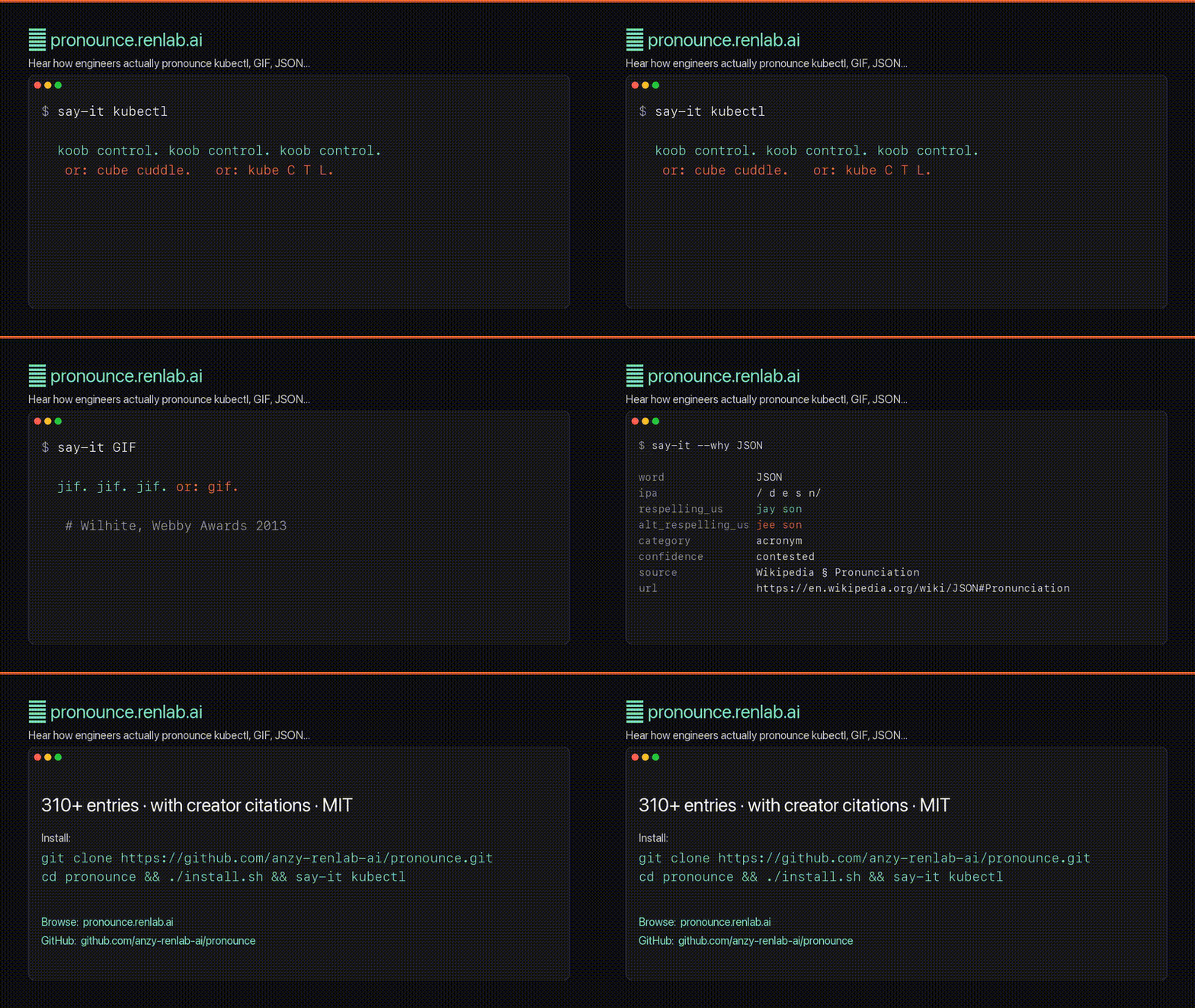
▶ Watch the 47-second promo (with voice) · 🎯 Try the quiz · 🎤 Voice search
🚀 Try it in 30 seconds
git clone https://github.com/anzy-renlab-ai/pronounce.git
cd pronounce && ./install.sh
say-it kubectl
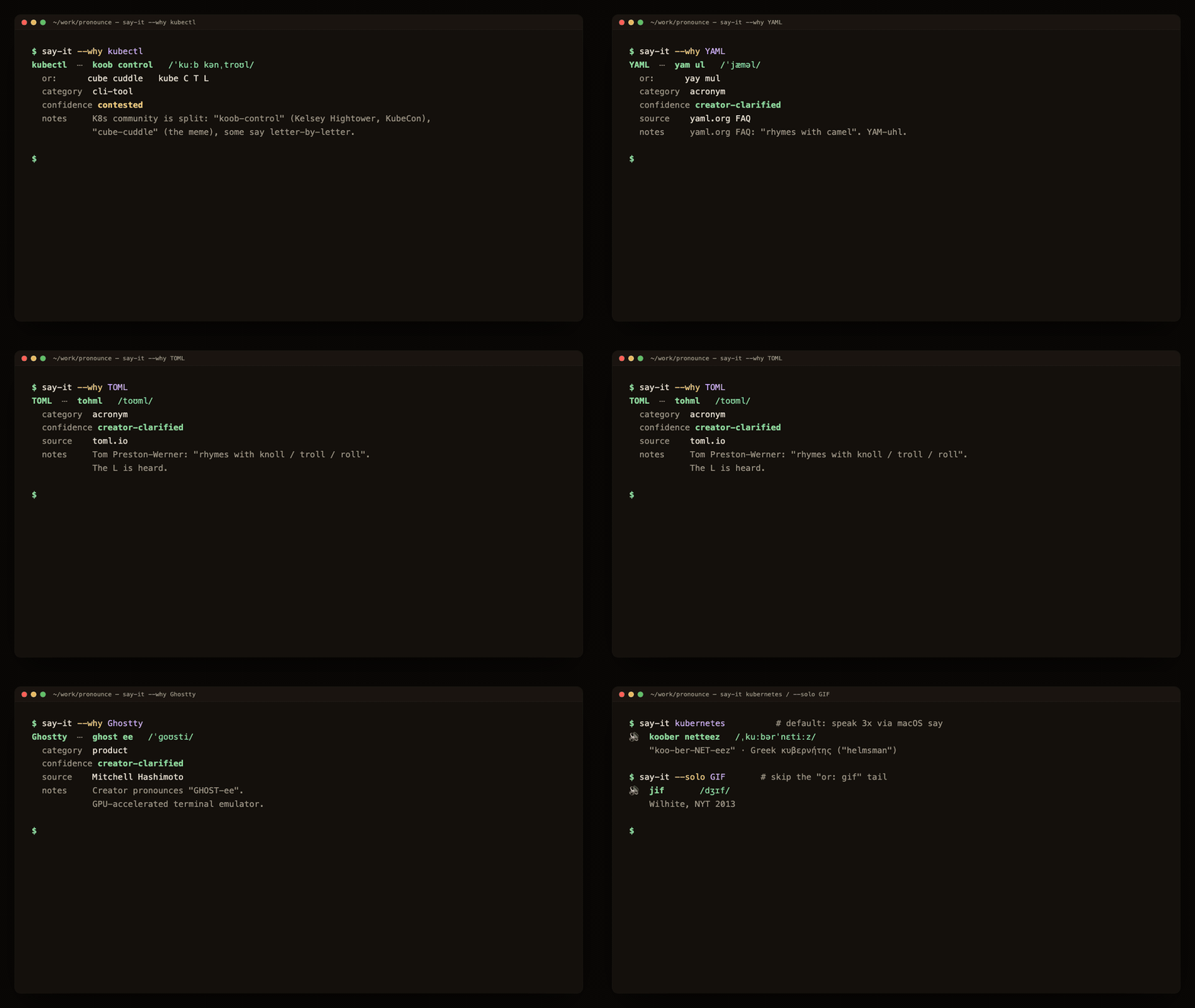
That's it. Now try say-it GIF, say-it nginx, say-it Pydantic, say-it --why JSON, or say-it quiz for a 10-question challenge. Linux users: install espeak-ng (sudo apt install espeak-ng) and the CLI just works. Windows: same CLI under WSL or git-bash + PowerShell. Or skip install and use the browser at pronounce.renlab.ai.
⭐ If
say-it kubectlsaves you one cringey standup moment — star the repo. It nudges more devs to contribute their favorite mispronounced project name.
🏆 The developer pronunciation scoreboard
1,848 entries — 1,229 carry a citable source — 86 settled by the creator themselves, 169 the community still argues about. The famous ones:
✅ Settled — the creator said so
| Word | It's… | …not | Settled by |
|---|---|---|---|
| GIF | "jif" | "gif" (hard g) | Steve Wilhite (creator), NYT 2013 |
| nginx | "engine X" | "n-jinx" | NGINX official |
| YAML | "yam-ul" | "yammel" | yaml.org |
| GNU | "guh-NEW" (hard g) | "noo" | GNU Project |
| LaTeX | "lay-tek" | "lay-teks" | Lamport / LaTeX project |
| TOML | rhymes with "knoll" | "tom-el" | Tom Preston-Werner (creator) |
| Tcl | "tickle" | "T-C-L" | John Ousterhout (creator) |
| awk | "auk" (like the bird) | "A-W-K" | Aho / Weinberger / Kernighan |
⚔️ Still contested — both readings are in active use
| Word | Camp A | Camp B |
|---|---|---|
| kubectl | "koob-control" | "cube-cuddle" |
| SQL | "sequel" | "S-Q-L" |
| JSON | "JAY-son" | "JEE-son" |
| GUI | "gooey" | "G-U-I" |
| JWT | "jot" (per RFC 7519) | "J-W-T" |
Every cell has IPA, audio, and the source. Hear all 1,848 →
Disagree with one? That's the whole point — open a PR with your reading and a source. The argument is the dataset.
What you're actually getting
- 1,848 entries — 1,229 carry a citable source. Confidence-tagged (
creator-clarified/community-consensus/contested), each with a citable URL where one exists (we'd rather leave it blank than fabricate one). Wilhite said GIF is "jif" at the 2013 Webby Awards. Crockford says JSON is "JAY-son" (RailsConf 2009). RFC 7519 says JWT is "jot". The dictionary cites them. - Multi-reading audio. For words where the debate is real — GIF, SQL, GUI, char, regex — the CLI chains the alternates after the primary with a spoken "or:" so you hear the debate without staring at the terminal.
--soloskips the tail once you've internalized it. - Zero deps. ~250 lines of Bash. No npm, no sudo, no surprises. Wraps the
sayengine that's already on your Mac. Ships a Claude Code skill and an MCP server so your AI answers "how do you pronounce X?" with audio, not a phonetic guess.
$ say-it --why JSON
word              JSON
ipa               /ˈdʒeɪsən/
respelling_us     jay son
source            Douglas Crockford (RailsConf 2009)
url               https://www.youtube.com/watch?v=-C-JoyNuQJs
Why not just Google?
Because Google gives you 47 Reddit arguments and a YouTube clip you have to unmute. IPA gives you /ˈkuːb kənˌtroʊl/ — a reference, not a teacher.
You don't need a phonetic transcription. You need to hear the word. Twice. Maybe three times. Done.
say-it ships a community-maintained dictionary of how engineers actually say the names that trip everyone up — and feeds the intended respelling to your OS's text-to-speech engine, so kubectl comes out as koob-control, not whatever your computer guessed from the letters.
Famous moments
Some pronunciations aren't opinions — the creators settled them. The dictionary cites every one:
| Word | Reading | Source |
|---|---|---|
GIF |
"jif" (creator says so) | Steve Wilhite, Webby Awards 2013 |
JSON |
"jay-son" | Douglas Crockford, RailsConf 2009 |
GNU |
"g-noo" (hard G, one syllable) | GNU Project official |
Linux |
"LIN-ux" (short i, schwa) | Linus Torvalds himself |
LaTeX |
"lay-tek" (or "lah-tek") | Leslie Lamport, official |
Django |
"JANG-go" (silent D) | Django FAQ |
Vue |
"view" (one syllable) | Evan You, Vue docs |
Vite |
"veet" (French for quick) | Vite docs |
Knative |
"KAY-native" (the K is voiced) | Knative docs |
etcd |
"et-cee-dee" (et-cetera-distributed) | etcd FAQ |
Every dictionary entry includes a source_url. Run say-it --why <word> to see it.
Install (macOS)
brew install anzy-renlab-ai/tap/say-it # Homebrew
Or the "Try it in 30 seconds" block above. ./install.sh drops:
- the CLI at
~/.local/bin/say-it, - the pronunciation dictionary at
~/.local/share/say-it/pronunciations.tsv, - if you use Claude Code, a
pronounce-wordskill at~/.claude/skills/pronounce-word/so any "how do you say X?" prompt to your AI gets answered with audio instead of IPA, - the same skill into
~/.agents/skills/(Codex CLI) and~/.kiro/skills/(Kiro) when those dirs exist — it's the cross-tool Agent Skills standard.
Make sure ~/.local/bin is on your $PATH. Linux also works — install espeak-ng (sudo apt install espeak-ng / brew install espeak-ng). Windows: WSL or git-bash + PowerShell. Or skip install entirely with the browser version at pronounce.renlab.ai.
Usage
say-it kubectl                    # primary × 3, then "or: <alt>" for each alternate
say-it --solo kubectl             # primary only — silence the "or:" tail
say-it --alt GIF                  # focus on the first alternate
say-it --alt 2 GUI                # focus on the Nth alternate (1-indexed)
say-it --all SQL                  # primary AND every alternate, each repeated
say-it --no-dict kubectl          # bypass the dictionary entirely
say-it --why JSON                 # show IPA, source URL, category, confidence
say-it list                       # every word in the dictionary
say-it search redis               # grep the dictionary (case-insensitive)

say-it -n 5 Pydantic              # 5 repetitions instead of 3
say-it -r 110 Knative             # slower (110 wpm; default is 130)
say-it -o /tmp/word.aiff Postgres # save to file instead of playing
say-it --list                     # all macOS voices
The default voice is Samantha (General American). Pass -v <voice> for any other macOS voice — but the dictionary is GenAm-only, by design.
Claude Code integration
You:    kubectl 怎么读?
Claude: 🔊 (plays "koob-control" three times)
        /ˈkuːb kənˌtroʊl/ — "KOOB-control". Kelsey Hightower says it
        this way (KubeCon talk). "Cube-cuddle" is an alternate —
        try `say-it --alt kubectl` to hear it.
Once installed, the pronounce-word skill auto-triggers on:
X 怎么读/X 怎么发音/读一下 Xhow do you pronounce X/pronounce X/how do you say X
Your AI replies with sound, not just a phonetic guess. Skill file: skills/pronounce-word/SKILL.md.
Not on Claude? Same skill drops into Codex CLI (codex plugin marketplace add anzy-renlab-ai/pronounce) and Kiro (~/.kiro/skills/), and the MCP server covers Claude Desktop, Cursor, Continue, Zed, Cline & friends — full matrix in integrations/.
VS Code extension
Open VSX Version Open VSX Downloads
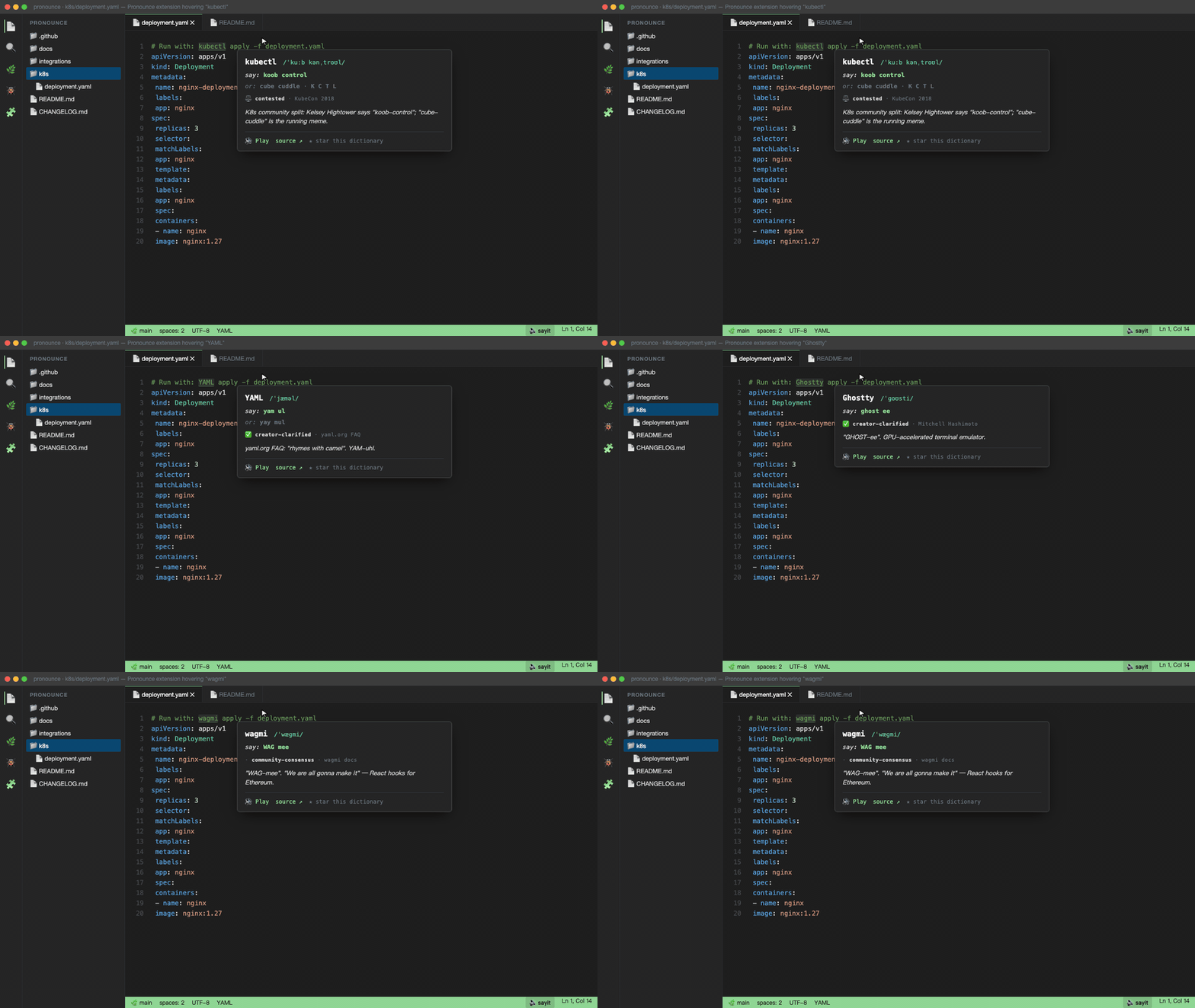
Hover over any tech word in any file — see the IPA, hear the pronunciation. Same 1,848-entry dictionary as the CLI, JSON-bundled at build (zero runtime parse cost).
# Cursor / VSCodium / Zed / Gitpod / Theia / code-server (Open VSX)
code --install-extension sayit.pronounce
# or the listing: https://open-vsx.org/extension/sayit/pronounce
Now live on Microsoft Marketplace too: ext install sayit.pronounce in VS Code. See marketplace listing.
- Hover over
kubectl,YAML,Ghostty,wagmi… → tooltip with IPA + 🔊 Play + ★ Star link. - ⌘⇧' — speak selection.
- Status bar
🔊 sayit— click to speak the current selection. - Welcome walkthrough — 4-step onboarding on first install.
Pronounce: Search dictionary…— fuzzy-find all 1,848 entries.
Source: integrations/vscode/. Cross-platform as of v0.3 — macOS say, Linux espeak-ng, Windows PowerShell.
Chrome / Edge / Brave extension
Click any tech word on any webpage → popup with IPA + audio. Same 1,848-entry dictionary; same Web Speech API as pronounce.renlab.ai. Sideload only for now (not yet on Chrome Web Store).
Download pronounce-chrome-0.3.0.zip → unzip → chrome://extensions/ → Developer mode → Load unpacked.
Source: integrations/chrome/.
How the dictionary works
data/pronunciations.tsv is the single source of truth — tab-separated, 1,848 entries, covering:
- Cloud / DevOps:
kubectl,nginx,Kubernetes,helm,Istio,Envoy,Prometheus,Grafana,Terraform,Argo,Knative,etcd,containerd,runc,Podman, ... - Languages / Frameworks:
Django,Vue,Vite,Pydantic,Bun,Deno,Hugo,Hono,Caddy,Svelte,Astro,Pinia, ... - Databases:
PostgreSQL,Postgres,SQLite,MySQL,MongoDB,Cassandra,Redis,Ceph,ScyllaDB,ClickHouse,DuckDB, ... - CS jargon / acronyms:
GIF,JSON,SQL,GUI,GNU,char,regex,sudo,tmux,chmod,WYSIWYG,ASCII,enum,NaN,SaaS,PaaS, ... - Distros / tools:
Linux,Debian,Ubuntu,Arch,Nix,LaTeX,TeX,emacs,zsh, ...
Each entry has 10 columns: word | ipa | phon_us | alt_ipa | alt_phon_us | source_url | source_label | category | confidence | notes. The phon_us column is Apple's Speech Synthesis phoneme set, injected into say via [[inpt PHON]]…[[inpt TEXT]]. This is what gives the intended reading rather than whatever the TTS would have inferred from the letters.
Local override: drop a ~/.config/say-it/pronunciations.local.tsv and it takes precedence.
What works today
- ✅ macOS — any word, via the built-in
sayengine. Zero dependencies. - ✅ 1,229 of 1,848 entries carry a citable source — the rest are confidence-tagged, no fabricated citations.
- ✅ Audible multi-reading awareness — contested words audibly chain alternates with "or:".
- ✅
--alt [N],--all,--solo,--why,--json,--md,--no-dict,list,search,quiz,repl,stream,doctor,export,benchmark,badge,cheatsheet. - ✅ Claude Code skill + MCP server for AI-side pronunciation questions.
- ✅ Browser PWA — installable, offline-capable, instant search, voice-mic search, interactive quiz.
- ✅ Editor integrations — Raycast, Alfred, VS Code, Cursor, Codex, Kiro, Continue.
- ✅ 🌐 Live site — pronounce.renlab.ai (every word browsable, audio, source citation) + /zh (Chinese landing).
What's coming
See DESIGN.md for the architecture.
- ☁️ Cloud TTS (opt-in ElevenLabs / OpenAI) for the names native TTS still mangles.
- 📚 Anki export for vocabulary drills.
- 🌗 Light theme on the v2 homepage (already shipped on word/SEO pages).
Shipped since this list was written: Windows (PowerShell) + Linux (
espeak-ng) backends, andsay-it update(now a fast dictionary refresh;--fullreinstalls the CLI).
Contributing
Two things we want most:
- Pronunciation entries. Open a PR adding a row to
data/pronunciations.tsv. Required columns:word,ipa,phon_us. Highly preferred:source_url(creator interview, conf talk, official FAQ — anything verifiable). Contested readings are welcome; put the rival inalt_*columns and we'll wire--altthrough. - Backend quality. macOS (
say) is the gold standard; the Linux (espeak-ng) and Windows (PowerShell) backends ship but are best-effort — help us close the gap. SeeDESIGN.md§Backends.
Keep it tiny. Keep it dep-free where possible. Keep the defaults opinionated (3 reps, GenAm, Samantha voice).
⭐ Support — start with a star
The dictionary is free and MIT. The single highest-leverage thing you can do is star the repo — it's the signal that pulls in more contributors, more PRs, more creator-clarified entries.
- ⭐ Star on GitHub → — one click, no signup, biggest effect.
Optional, if it's saved you real standup pain:
- ☕ Coffee on Ko-fi — pays for one new entry per cup.
- 💚 Sponsor on GitHub — recurring tier (pending Sponsors approval).
Dollars cover hosting (Vercel/Cloudflare/Open VSX), domain renewals, MiniMax narration credits for promo videos, and time to track down creator citations for new entries.
Contributors
Every entry, source upgrade, and skill fix counts. Open a PR — your face shows up here.
License
MIT — see LICENSE.
IPA is a reference. Audio is a teacher.
Установка anzy-renlab-ai/pronounce
У этого сервера нет опубликованного пакета — он собирается из исходников. Открой репозиторий и следуй инструкции в README.
▸ github.com/anzy-renlab-ai/pronounceFAQ
anzy-renlab-ai/pronounce MCP бесплатный?
Да, anzy-renlab-ai/pronounce MCP бесплатный — установка в пару кликов через Unyly без оплаты.
Нужен ли API-ключ для anzy-renlab-ai/pronounce?
Нет, anzy-renlab-ai/pronounce работает без API-ключей и переменных окружения.
anzy-renlab-ai/pronounce — hosted или self-hosted?
Self-hosted: сервер запускается локально на твоей машине командой из раздела установки.
Как установить anzy-renlab-ai/pronounce в Claude Desktop, Claude Code или Cursor?
Открой anzy-renlab-ai/pronounce на unyly.org, выбери вкладку своего клиента (Claude Desktop, Claude Code, Cursor) и нажми Install — конфиг сгенерируется автоматически, без правки JSON.
Похожие MCP
Fetch
Web content fetching and conversion for efficient LLM usage.
AWS KB Retrieval
Retrieval from AWS Knowledge Base using Bedrock Agent Runtime.
 автор: modelcontextprotocol
Spring AI MCP Server
Provides auto-configuration for setting up an MCP server in Spring Boot applications.
llm-analysis-assistant
A very streamlined mcp client that supports calling and monitoring stdio/sse/streamableHttp, and can also view request responses through the /logs page. It also
 автор: xuzexin-hz
Compare anzy-renlab-ai/pronounce with
Не уверен что выбрать?
Найди свой стек за 60 секунд
Автор?
Embed-бейдж для README
Похожее
Все в категории ai