
Myco: Agent-First Cognitive Substrate
БесплатноНе проверенAgent-first cognitive substrate: 20 verbs + 50 lint dims over a self-validating graph.

Описание
Agent-first cognitive substrate: 20 verbs + 50 lint dims over a self-validating graph.
README
⚠️ Deprecated: Myco has been reborn as v0.9-genesis
This PyPI package (
myco, v0.4–v0.8.x) is the Agent-First cognitive-substrate embryo: a 20-verb tool framework for an AI agent's memory. It is doctrinally a dead embryo, sealed at the git tag v0.8.8-final-embryo.The project has been reborn as a different conception: a decades-long symbiotic partnership between one human and a substrate that carries memory, character, and doctrine across LLM model generations. v0.9 is not a
pip install. It is a clone-and-build substrate (Rust + Python + TypeScript).👉 See github.com/Battam1111/Myco
Branch
v0.9-genesis, with itsGETTING_STARTED.md. ThismycoPyPI package is no longer the project; it remains only as the predecessor lineage.
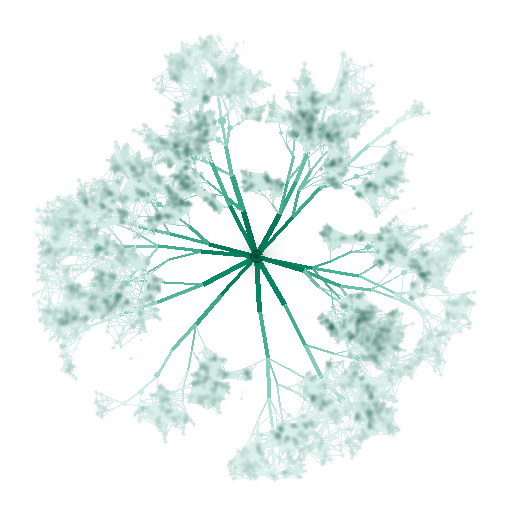
Myco
Devour everything. Evolve forever. You just talk.



Claude Code /plugin install myco@myco · Claude Desktop myco-install host cowork · Any MCP host pip install 'myco[mcp]'
What it is · How it lives · Quick start · Verbs · Self-validation
LangChain. LangGraph. CrewAI. DSPy. Claude Code skills. OpenHands. OpenClaw. Every few months the next framework drops and you migrate again.
Your notes rot too. The API you read three weeks back has changed. The doc you wrote last year is wrong now. Your AI does not even remember last week's decisions. Every new conversation starts from zero.
Now imagine one living substrate. It ingests the frameworks, the papers, the APIs, the codebases, the datasets, the decisions, the frictions. It keeps them connected in a graph the agent actually reads. It catches its own drift. It reshapes itself when your work outgrows its old form. For six months. For six years. No migration.
This is Myco.
What it is
Myco is a living cognitive substrate for your AI agent.
Everything the agent reads or writes, every piece of code and every paper and every decision and every friction, lives on your filesystem as plain markdown + YAML. Files cross-reference each other by name, forming a graph the agent actually reads. The agent eats raw material, digests it into integrated knowledge, immune-checks its own work against drift, propagates learning across your projects, and when the shape of the substrate no longer fits the shape of the work, reshapes the substrate itself. The kernel that runs all of this is itself a substrate, editable by default, maintained by the same agent that uses it.
Not a framework. Not a vector database. Not a managed service. A living filesystem for an agent you talk to.
The idea is older than the implementation. What changed is the agent. Today's models are finally capable of keeping their own tooling alive. Every earlier attempt at a self-maintaining knowledge system died in the same place, where the human in the loop could no longer keep up. Myco puts the loop inside the agent. Every surface, every verb, every rule assumes the maintainer is an agent, so the human in the loop is no longer load-bearing.
How it lives
You speak. The agent listens. Between your turns, Myco runs a metabolism.
- Ingestion.
hungerasks what is missing.eatabsorbs whatever you point at, whether a path, a URL, or a paragraph.senseandforagescan what is already here.excretesafely removes a raw note captured by mistake, moving it to an audit tombstone instead of silently deleting.intake(v0.6.0) bulk-ingests a whole directory, composing forage + eat with strict-mode failure visibility. - Digestion.
assimilatecooks raw notes into integrated knowledge.digestpromotes a single note.sporulateconcentrates integrated notes into a dispersible proposal. - Circulation.
traversewalks the graph and reports on its connectedness.propagatepublishes learning to a downstream substrate. - Homeostasis.
immuneruns a 47-dimension lint against the seven hard rules.senescewinds down each session cleanly. - Evolution. When the substrate's shape no longer fits the work, whether a canon field is missing, a new lint dimension is needed, or a verb must change,
fruitdrafts a three-round craft proposal,winnowgates its shape, andmoltships the contract bump.
Twenty verbs, one manifest, two faces: a CLI for you to observe, an MCP server for the agent to drive. You memorize nothing. The agent drives.
Five principles
- Only for the agent. Every surface, every message, every verb shape is primary material for the agent. Not documentation for a human reader.
- Devour everything. No filter on intake. Missing a signal costs more than eating one too many.
- Self-evolving shape. Canon, lint dimensions, verbs, the contract itself, all of it mutable, all of it changed through a single governed craft loop.
- Nothing is final.
integratedis a state, not an endpoint. Today's conclusion is tomorrow's raw material. - Mycelium network. Every node links to every other node by traversal. Orphans are dead tissue.
The kernel IS a substrate
Myco's own source tree is a substrate. .myco/canon.yaml at .myco/. .myco/MYCO.md as the agent entry page. .docs/primordia/ holding the three-round craft document that justifies every contract bump. The Python code under src/myco/ is the innermost ring of its own ecosystem. Not a read-only artifact someone else wrote.
So the normal install clones the source and runs pip install -e on it. The agent that uses Myco is the same agent that maintains Myco. When it needs a new lint dimension, it scaffolds one with myco ramify, writes the case with myco fruit, gates the shape with myco winnow, and ships the bump with myco molt. No fork. No waiting PR. No long-lived feature branch. 永恒进化.
PyPI exists for bootstrap and for library embedding. It is not the normal install path.
Quick start
pipx run --spec 'myco[mcp]' myco-install fresh ~/myco
This clones the repository to ~/myco, runs pip install -e on it, and leaves you with a writable kernel. Then germinate a substrate inside any project:
cd your-project
myco germinate . --substrate-id your-project
Hook Myco into your agent host in one command:
- Claude Code. Run
/plugin marketplace add Battam1111/Myco, then/plugin install myco@myco. - Claude Desktop / Cowork. Run
myco-install host coworkto write the MCP entry, then download myco-.zip and drag it into Claude Desktop → Settings → Plugins → Upload. Claude Desktop uploads it to your private Cowork marketplace and every subsequent session auto-installs themyco-substrateonboarding skill. (v0.7.4 hotfix: artifact extension is.zip, not.plugin— Anthropic GitHub issue #40414.) - Any other MCP host. Run
myco-install host <cursor | windsurf | zed | vscode | openclaw | claude-desktop | gemini-cli | codex-cli | goose>, or pass--all-hoststo auto-detect every host on this machine. - Via the official MCP Registry. Use the namespace io.github.Battam1111/myco for clients that auto-resolve it.
Per-host snippets for the nine hosts with divergent schemas, Python-framework adapters (LangChain, CrewAI, DSPy, Smolagents, Agno, PraisonAI, MS Agent Framework, Claude Agent SDK), and library-embedding examples all live in INSTALL.md.
Optional extras
pip install 'myco[mcp]'— MCP server stack (recommended baseline).pip install 'myco[adapters]'— PDF / HTML / URL ingestion adapters (~10 MB).pip install 'myco[multimedia]'— v0.8.0: audio / image-OCR / video-frame ingestion adapters. Heavy footprint (~500 MB once PyTorch + Whisper weights download); strictly opt-in. Default install stays lean — without this extras the three multimedia adapters cleanly emit install-extras failed-stubs when forage encounters a.mp3/.png/.mp4, soeatnever silently drops a media file. Image and video OCR additionally require the systemtesseractbinary on PATH (install viaapt-get install tesseract-ocr/brew install tesseract/ Windows installer).
The twenty verbs
Six subsystems. Every name is a fungal-biology term whose meaning tracks its action.
- Germination.
germinatestarts a fresh substrate. - Ingestion.
hunger(what is missing?),eat(absorb raw material),sense(keyword search),forage(scan ingestible paths),excrete(safely delete a raw note with an audit tombstone),intake(bulk-ingest a directory; v0.6.0). - Digestion.
assimilate(raw to integrated, in bulk),digest(promote a single note),sporulate(integrated to dispersible proposal). - Circulation.
traverse(walk the graph),propagate(publish to a downstream substrate). - Homeostasis.
immune(47-dimension lint;--fixrepairs mechanically where it can). - Cycle.
senesce(session dormancy),fruit(three-round craft),winnow(gate the craft's shape),molt(ship the contract bump),ramify(scaffold a new dimension, verb, or adapter),graft(manage substrate-local plugins),brief(human-facing state rollup).
Every verb lives in src/myco/boundary/surface/manifest.yaml. The CLI (myco VERB) and the MCP tool surface both derive from that manifest mechanically. One source of truth for both faces. A downstream substrate can ramify its own dimensions or verbs into .myco/plugins/ without ever forking Myco.
Self-validation
Myco does not trust its agent to remember the contract. It enforces it.
- 47 lint dimensions across four categories: mechanical (canon invariants, write-surface, LLM-boundary, OAuth token residency, sampling gates, capability layering), shipped (package and canon version parity, kernel-ahead-of-canon), metabolic (raw backlog, stale integrated notes, sporulated-reabsorbed integrity, stale-DRAFT cleanup, shim hit-counter), semantic (graph connectedness, orphan detection, version-anchor freshness, Living Bets cadence + two-regime axis).
myco immune --fixrepairs mechanically where it can. - Seven hard rules (R1 through R7) govern every session: boot ritual, session-end, sense-before-assert, eat-on-friction, cross-reference-on-creation, write-surface discipline, top-down layering. Full contract at L1_CONTRACT/protocol.md.
- Pulse sidecar. Every MCP tool response carries a
substrate_pulseechoing the current contract version and a rule hint that escalates (R1, then R3, then on through the session) as the session progresses. A server-side push. The agent cannot accidentally forget. - Write-surface enforcement. Any write outside
_canon.yaml::system.write_surface.allowedis refused withWriteSurfaceViolation. Discipline as a mechanism, not as a request.
Zero host-side configuration. R1 through R7 ride inside the MCP server itself, so every client (Claude Code, Cursor, Windsurf, Zed, Codex, Gemini, Continue, Claude Desktop, OpenClaw, OpenHands) gets the same contract on boot.
Integrations
- Claude Code. Official plugin wires MCP, hooks, and slash skills in one command. Or drop
.claude/in by hand. - Cowork (Claude Desktop local-agent-mode). Two steps: (1)
myco-install host coworkwrites the MCP server entry; (2) drag the.zipbundle from GitHub releases into Claude Desktop's plugin upload. Claude Desktop uploads it to your private Cowork marketplace, and every session auto-installs themyco-substrateonboarding skill so the agent follows R1 through R7 the moment it sees_canon.yaml. Cowork does not expose hooks and does not read local plugin dirs, so drag-and-drop is the only persistent path. See INSTALL.md for the full rationale. - Any MCP host. Ten are automated via
myco-install. Another nine have per-host snippets in INSTALL.md. Any other client can still runmcp-server-mycoover stdio directly. - Python agent frameworks. LangChain, CrewAI, DSPy, Smolagents, Agno, PraisonAI, MS Agent Framework, and Claude Agent SDK all consume Myco via
StdioServerParameters(command="mcp-server-myco"). - Downstream substrates.
myco propagatepublishes. The data-driven per-host config writers live atmyco.boundary.install.clients(v0.8.5 — the previousmyco.boundary.host_integrationadapter package was excreted as never-wired-into-production-code-paths).
Learn more
L0_VISION.md · L1_CONTRACT/ · L2_DOCTRINE/ · INSTALL.md · CONTRIBUTING.md · Issues
Architectural changes land as dated craft documents under .docs/primordia/. Every release is governed by a three-round debate, then a molt, then an auto-published fan-out to PyPI, the MCP Registry, and the GitHub release.
Установка Myco: Agent-First Cognitive Substrate
У этого сервера нет опубликованного пакета — он собирается из исходников. Открой репозиторий и следуй инструкции в README.
▸ github.com/Battam1111/MycoFAQ
Myco: Agent-First Cognitive Substrate MCP бесплатный?
Да, Myco: Agent-First Cognitive Substrate MCP бесплатный — установка в пару кликов через Unyly без оплаты.
Нужен ли API-ключ для Myco: Agent-First Cognitive Substrate?
Нет, Myco: Agent-First Cognitive Substrate работает без API-ключей и переменных окружения.
Myco: Agent-First Cognitive Substrate — hosted или self-hosted?
Self-hosted: сервер запускается локально на твоей машине командой из раздела установки.
Как установить Myco: Agent-First Cognitive Substrate в Claude Desktop, Claude Code или Cursor?
Открой Myco: Agent-First Cognitive Substrate на unyly.org, выбери вкладку своего клиента (Claude Desktop, Claude Code, Cursor) и нажми Install — конфиг сгенерируется автоматически, без правки JSON.
Похожие MCP
Fetch
Web content fetching and conversion for efficient LLM usage.
AWS KB Retrieval
Retrieval from AWS Knowledge Base using Bedrock Agent Runtime.
 автор: modelcontextprotocol
Spring AI MCP Server
Provides auto-configuration for setting up an MCP server in Spring Boot applications.
llm-analysis-assistant
A very streamlined mcp client that supports calling and monitoring stdio/sse/streamableHttp, and can also view request responses through the /logs page. It also
 автор: xuzexin-hz
Compare Myco: Agent-First Cognitive Substrate with
Не уверен что выбрать?
Найди свой стек за 60 секунд
Автор?
Embed-бейдж для README
Похожее
Все в категории ai