

About
Interacting with Notion API
README
AI-friendly MCP server for the Notion API. It helps agents find, read, query, and update Notion workspaces while keeping responses compact enough for day-to-day AI workflows.
This server targets the Notion API 2026-03-11 and uses the current database/data source model. It exposes MCP tools, prompts, resources, structured tool results, and optional MCP Apps for interactive Notion workflows.
Highlights
- Search and target discovery with
notion_find. - Compact page reading with stable block IDs via
notion_read_page. - Data source schema inspection with
notion_inspect_data_source. - Schema-aware data source querying and item creation with simple values.
- Simple page editing tools for paragraphs, headings, lists, todos, quotes, callouts, code blocks, dividers, and safe Markdown append.
- Raw Notion API tools for advanced block, page, database, data source, comment, and user operations.
- Optional MCP Apps: Data Source Explorer and Page Workbench.
Quick Start
Add this server to an MCP host such as Claude Desktop:
{
  "mcpServers": {
    "notion": {
      "command": "npx",
      "args": ["-y", "@suekou/mcp-notion-server"],
      "env": {
        "NOTION_API_TOKEN": "your-integration-token"
      }
    }
  }
}
Restart your MCP host after saving the configuration.
Setup Guide
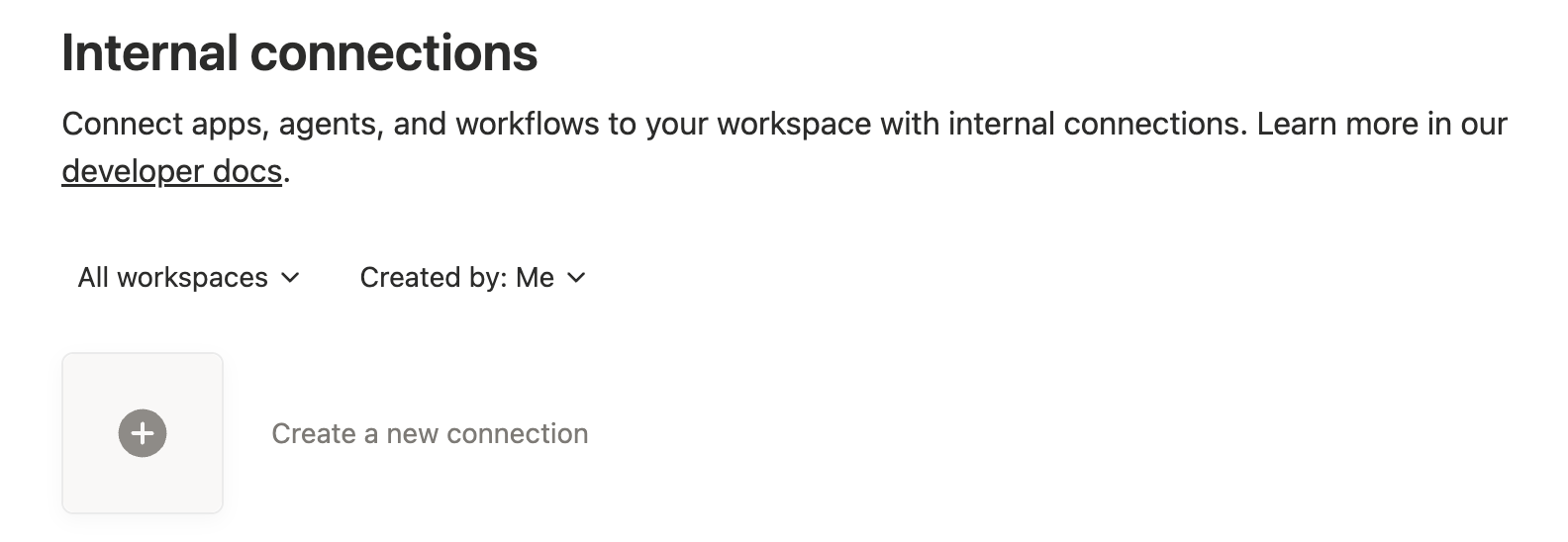
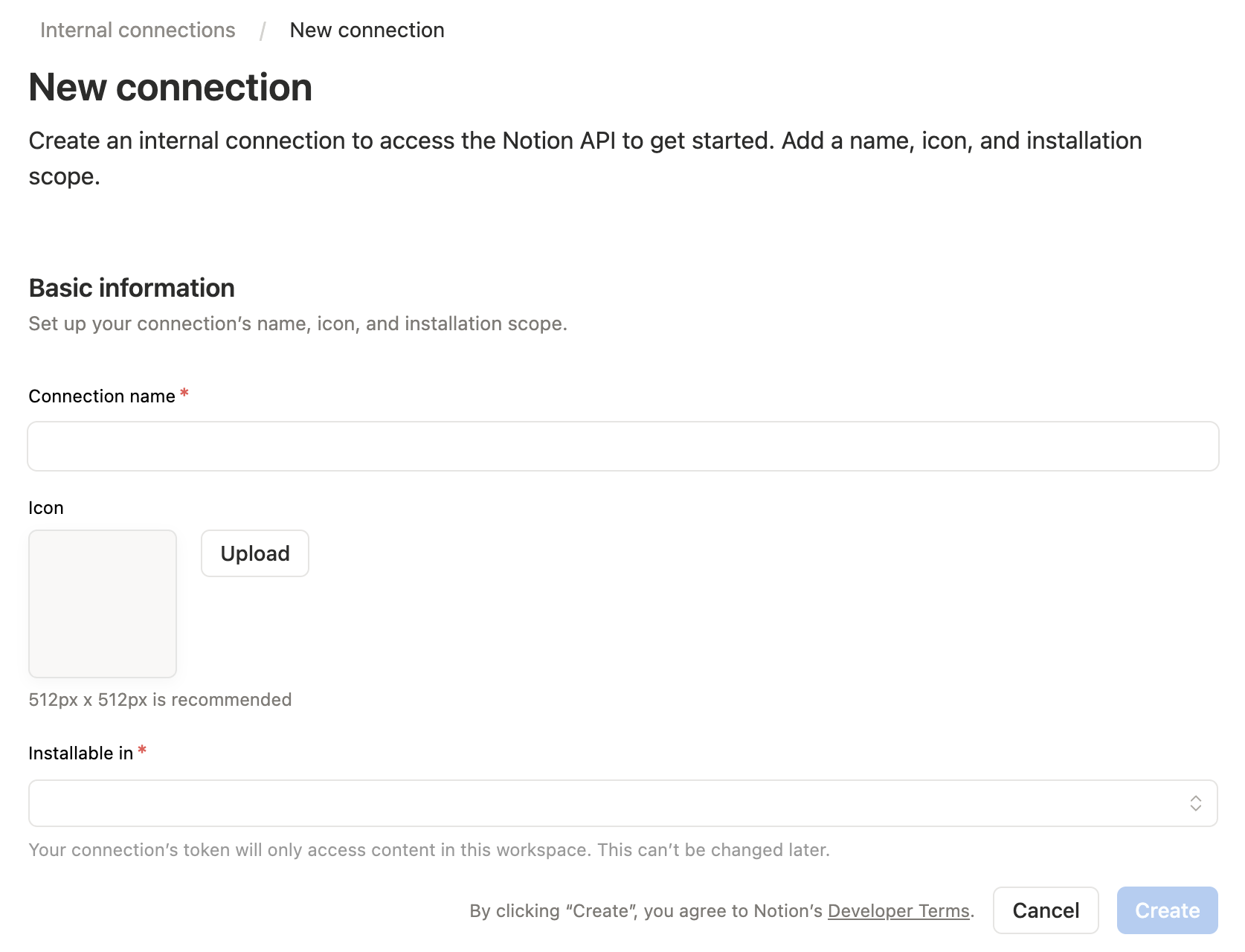
1. Create a Notion integration
Open the Notion integrations dashboard, then create a new internal integration.
2. Configure capabilities
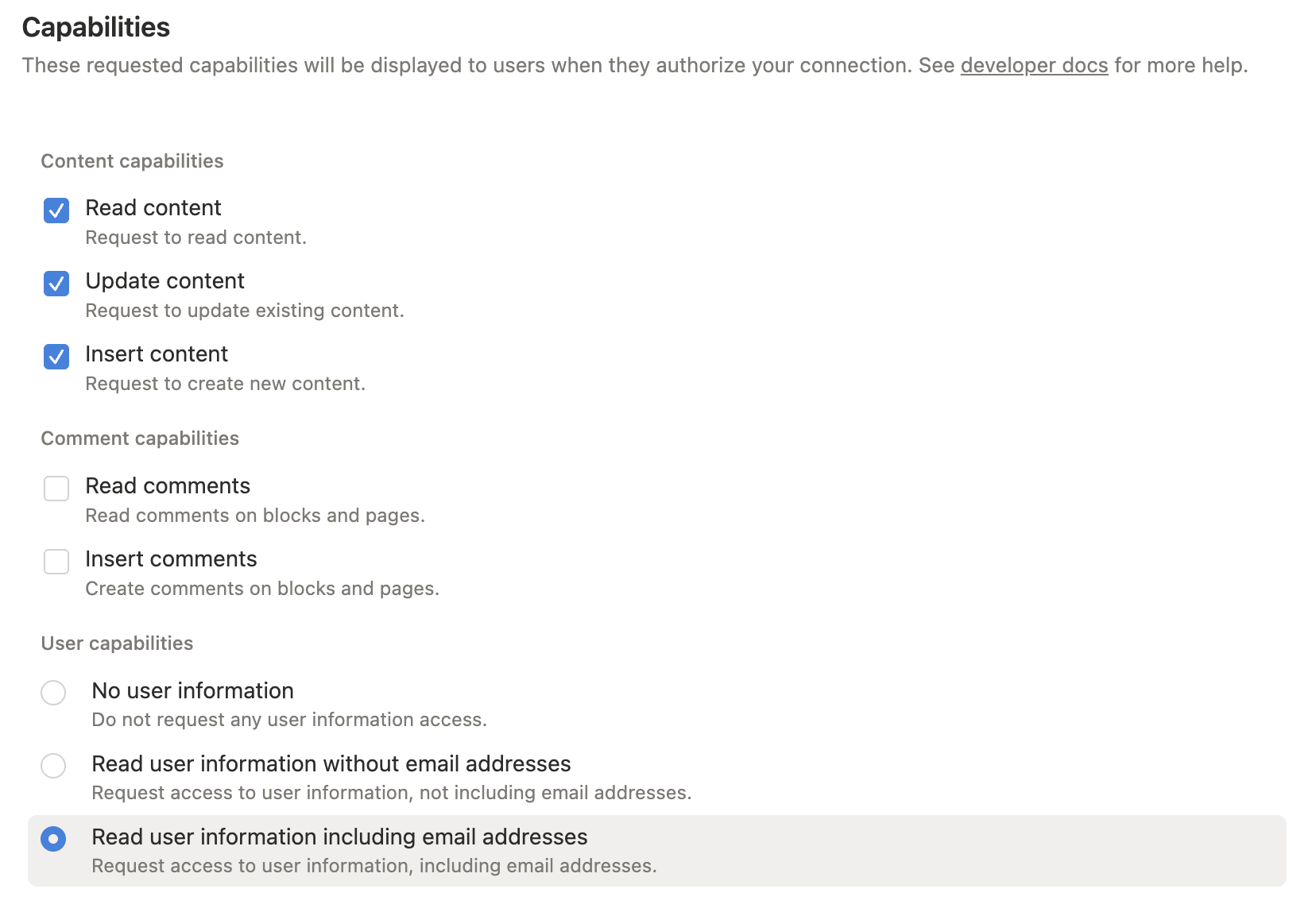
Grant only the capabilities you need:
- Read content: required for search, page reads, data source retrieval, and queries.
- Insert content: required for creating pages/items and appending blocks.
- Update content: required for updating pages, blocks, and data source schemas.
- Read comments / Insert comments: required only for comment tools.
- User information: required only when using user lookup tools.
For full functionality during setup, enable read, insert, and update content. Add comment or user capabilities only if you plan to use those tools.
3. Grant content access
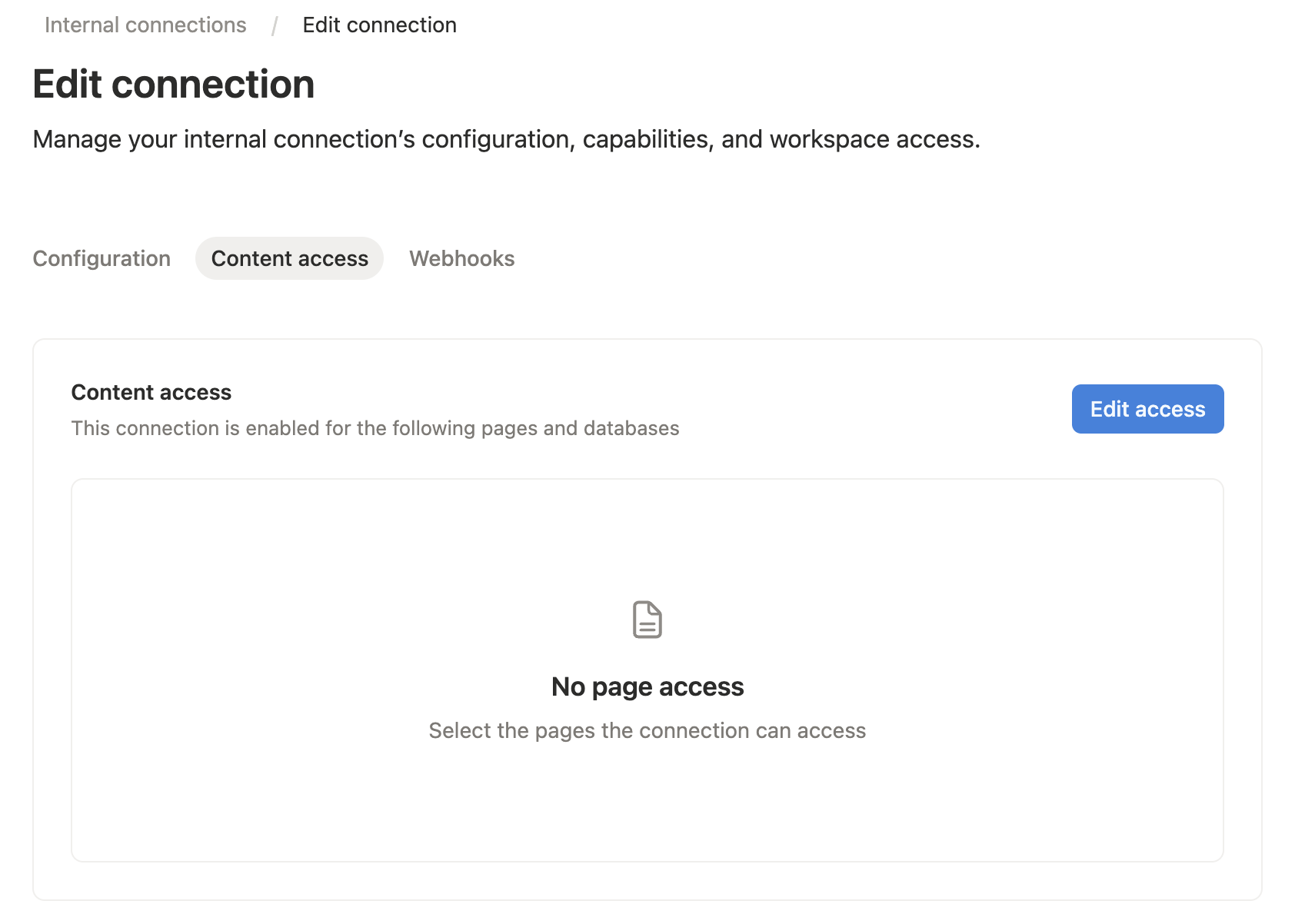
Open the Content access tab for your integration, then select the pages or databases you want the MCP server to read or edit.
You can also grant access from the target Notion page or database: open the ... menu, choose Connections, then add your integration.
Notion only lets an integration access pages and databases that have been shared with it. A connection added to a page can also access that page's children.
4. Copy the internal integration token
Copy the integration secret. This value becomes NOTION_API_TOKEN in your MCP host config.

5. Configure your MCP host
For Cursor, Claude Desktop, and other MCP hosts, add this server config to your MCP settings:
{
  "mcpServers": {
    "notion": {
      "command": "npx",
      "args": ["-y", "@suekou/mcp-notion-server"],
      "env": {
        "NOTION_API_TOKEN": "secret_xxxxxxxxxxxxxxxxxxxxxxxxxxxxxxxxxxxxxxxxxxx"
      }
    }
  }
}
For a locally built checkout:
{
  "mcpServers": {
    "notion": {
      "command": "node",
      "args": ["/absolute/path/to/suekou-mcp-notion-server/build/index.js"],
      "env": {
        "NOTION_API_TOKEN": "secret_xxxxxxxxxxxxxxxxxxxxxxxxxxxxxxxxxxxxxxxxxxx"
      }
    }
  }
}
Recommended Workflow
- Use
notion_findto locate a page or data source. - Use
notion_read_pagefor page context and editable block IDs. - Use
notion_inspect_data_sourcebefore querying or creating data source items. - Use
notion_query_data_source_by_valuesandnotion_create_data_source_item_from_valuesfor common data source work. - Use
notion_append_markdown,notion_append_content,notion_update_content, ornotion_update_content_batchfor normal page edits. - Fall back to raw JSON tools only when the simplified tools do not cover the Notion API shape you need.
For Developers
These references are mainly for development, customization, and advanced MCP workflows:
- Configuration: environment variables, command-line arguments, MCP host examples, development commands, and troubleshooting.
- Tools: complete tool reference grouped by workflow area.
- Workflows: practical read, write, data source, migration, and error-handling guidance.
- MCP Apps: interactive Data Source Explorer and Page Workbench details.
Development
This project uses Node.js 22 or newer and pnpm.
pnpm install --frozen-lockfile
pnpm run build
pnpm test
Use the MCP inspector during local development:
pnpm run inspector
License
This MCP server is licensed under the MIT License. This means you are free to use, modify, and distribute the software, subject to the terms and conditions of the MIT License. For more details, please see the LICENSE file in the project repository.
Installing suekou/mcp-notion-server
This server has no published package — it is built from source. Open the repository and follow its README.
▸ github.com/suekou/mcp-notion-serverFAQ
Is suekou/mcp-notion-server MCP free?
Yes, suekou/mcp-notion-server MCP is free — one-click install via Unyly at no cost.
Does suekou/mcp-notion-server need an API key?
No, suekou/mcp-notion-server runs without API keys or environment variables.
Is suekou/mcp-notion-server hosted or self-hosted?
Self-hosted: the server runs locally on your machine via the install command above.
How do I install suekou/mcp-notion-server in Claude Desktop, Claude Code or Cursor?
Open suekou/mcp-notion-server on unyly.org, pick your client tab (Claude Desktop, Claude Code, Cursor) and press Install — the config is generated automatically, no JSON editing.
Related MCPs
Notion
Read and write pages in your workspace
 by Notion
Linear
Issues, cycles, triage — from Claude
 by Linear
Google Drive
Search and read your Drive files
 by Google
mindsdb/mindsdb
Connect and unify data across various platforms and databases with [MindsDB as a single MCP server](https://docs.mindsdb.com/mcp/overview).
 by mindsdb
Compare suekou/mcp-notion-server with
Not sure what to pick?
Find your stack in 60 seconds
Author?
Embed badge for your README
Browse similar
All productivity MCPs