loading…
en/
Browse all
Kondukt
FreeMaintainedMCP DevTools — test, validate, debug, and scaffold MCP servers for Claude Code, Codex, Gemini CLI, and any MCP client.

About
MCP DevTools — test, validate, debug, and scaffold MCP servers for Claude Code, Codex, Gemini CLI, and any MCP client.
README
Kondukt
Postman for MCP servers — test, validate, debug, and scaffold.
Kondukt is an open-source developer toolkit for the Model Context Protocol (MCP). It connects to any MCP server, inspects what it exposes, validates protocol compliance, calls tools interactively, and scaffolds new servers from templates.
And it's itself an MCP server — so you can register it with Claude Code, Codex, or Gemini CLI, and ask your AI agent to test and validate other MCP servers for you.
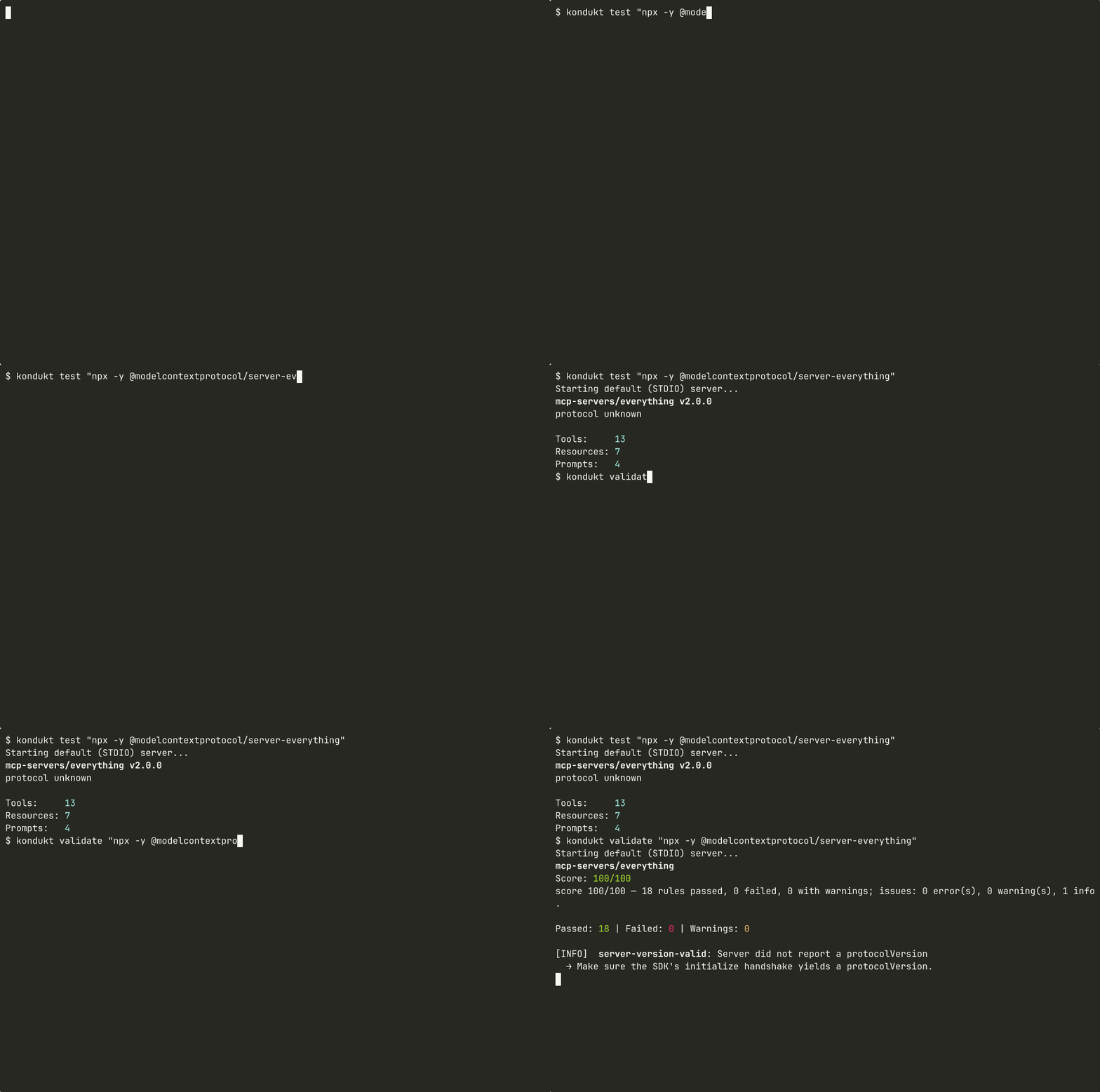
Status: v0.1.x. Stable enough for daily use, but still evolving. Bug reports and PRs welcome.
Why Kondukt
MCP has 97M+ SDK downloads and 10,000+ published servers. Every major AI vendor ships it. And yet, building an MCP server today feels like writing HTTP APIs in 2005 — no Postman, no linter, no scaffolder. The only existing tool (MCP Inspector) is a basic debugger; there's no validation, no scoring, no project generation.
Kondukt is the tool I wanted and couldn't find. If you build MCP servers, it should save you hours.
| MCP Inspector | Kondukt | |
|---|---|---|
| Inspect tools/resources/prompts | ✅ | ✅ |
| Call tools interactively | ✅ | ✅ |
| Protocol validation | ❌ | ✅ (18 rules) |
| Quality score | ❌ | ✅ (0–100) |
| Scaffold new servers | ❌ | ✅ |
| Usable from AI agents | ❌ | ✅ (itself an MCP server) |
| AI context file generation | ❌ | ✅ |
Two ways to use it
As a CLI — fast feedback while you build:
npx kondukt test "npx -y @modelcontextprotocol/server-everything"
npx kondukt validate "npx -y @modelcontextprotocol/server-everything"
As an MCP server — your agent does the work:
claude mcp add kondukt -- npx kondukt serve
Then, inside Claude Code:
"Test the MCP server at
npx my-serverand tell me what tools it exposes. Then run a validation and fix anything that fails."
Claude calls Kondukt's tools directly. No context-switching between terminal and editor.
Quick start
No install needed — everything runs via npx.
# Discover tools, resources, and prompts on any MCP server
npx kondukt test "npx -y @modelcontextprotocol/server-everything"

# Run 18 protocol compliance checks and get a 0–100 score
npx kondukt validate "npx -y @modelcontextprotocol/server-everything"

# Call a specific tool with arguments
npx kondukt call "npx -y @modelcontextprotocol/server-everything" \
  --tool echo --args '{"message": "hello"}'

# Generate a new MCP server project
npx kondukt scaffold my-server --template typescript \
  --tool "get_weather:Get weather for city:city:string"

# Generate AI context files (CLAUDE.md, AGENTS.md, GEMINI.md) for this repo
npx kondukt agent-docs . --all
Features
kondukt test — inspect any MCP server
Connects to a server (stdio or HTTP/SSE), auto-discovers tools, resources, and prompts, and prints them in a structured, readable format.
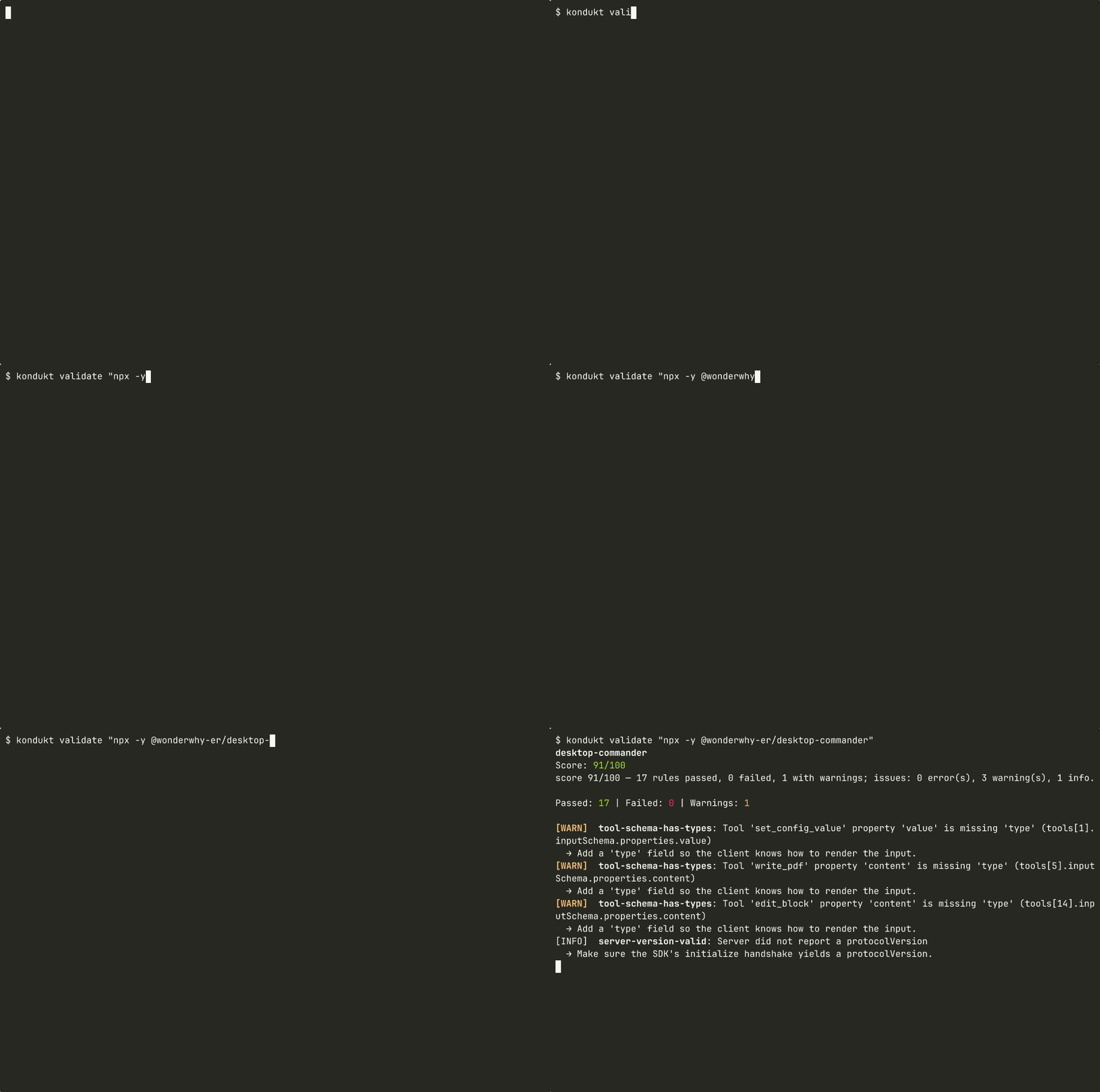
kondukt validate — 18 protocol rules, 0–100 score
Four categories:
- Tools — schema validity, descriptions, duplicate names
- Resources — URI formats, MIME types, metadata
- Prompts — argument schemas, descriptions
- Protocol — initialization, capabilities, error handling
Every violation comes with a rule ID, severity, and a suggested fix.
kondukt call — interactive debugging
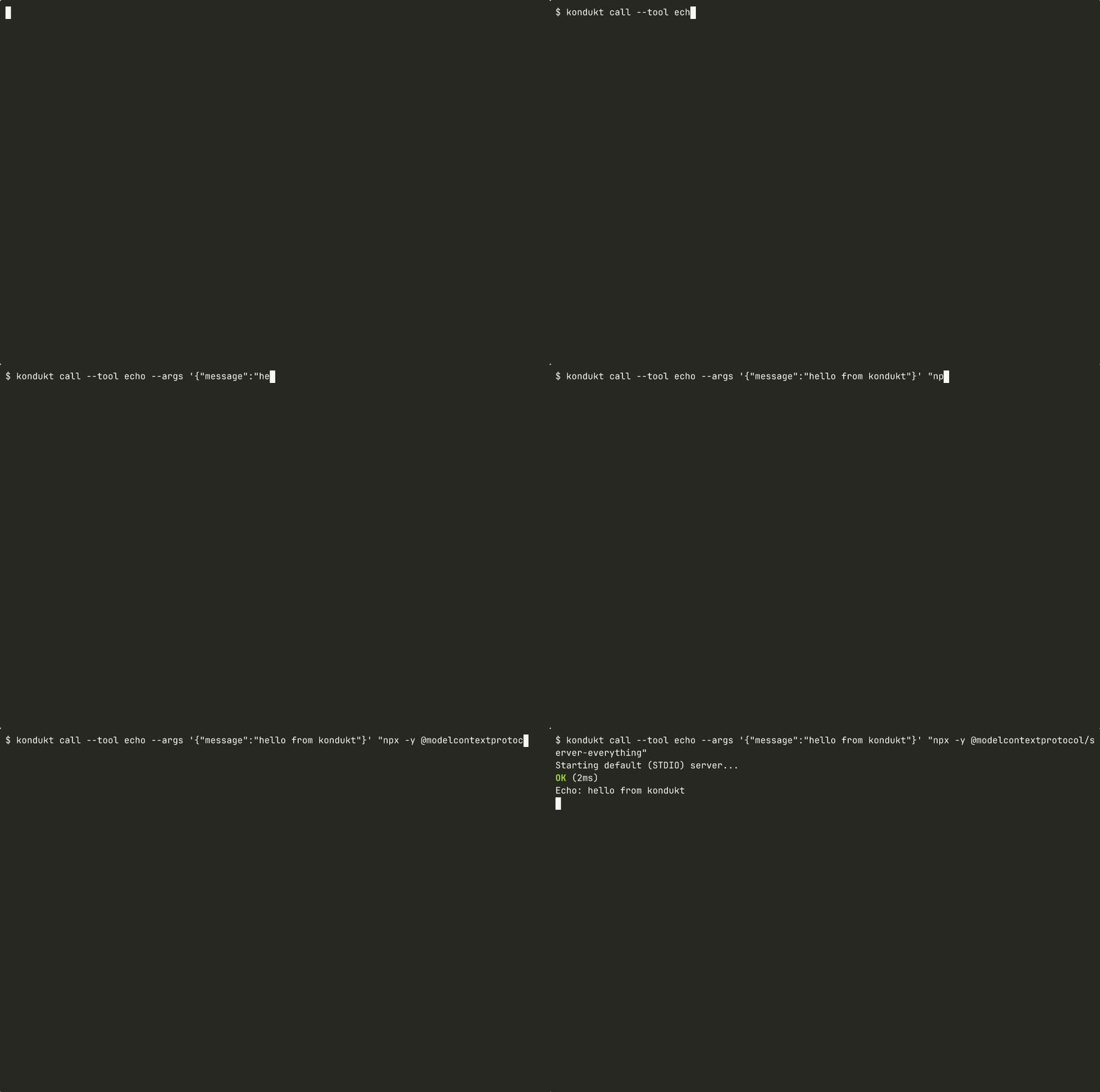
Execute any tool exposed by a server with custom arguments. See the raw response. Essential for reproducing bugs.
kondukt scaffold — new server in 10 seconds
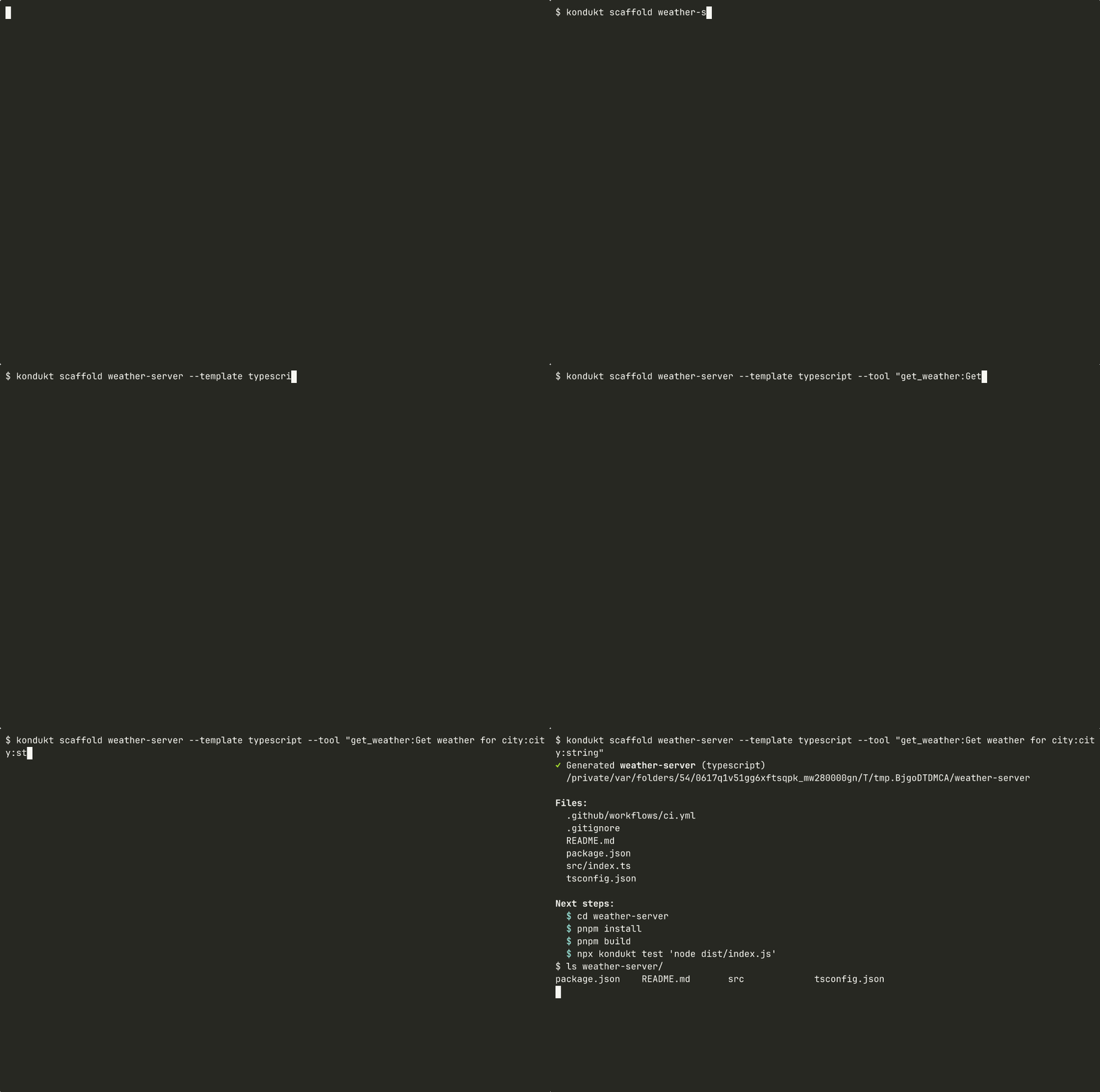
Generates a complete, runnable MCP server project. TypeScript or Python templates. Includes types, tests, CI config, and README. Define tools from the CLI:
npx kondukt scaffold weather-server \
  --template typescript \
  --tool "get_forecast:Get forecast:city:string,days:number"
kondukt agent-docs — context files for AI coding tools
Analyzes a codebase and generates CLAUDE.md, AGENTS.md, or GEMINI.md. Detects frameworks, ORMs, test runners, and project conventions via static analysis.
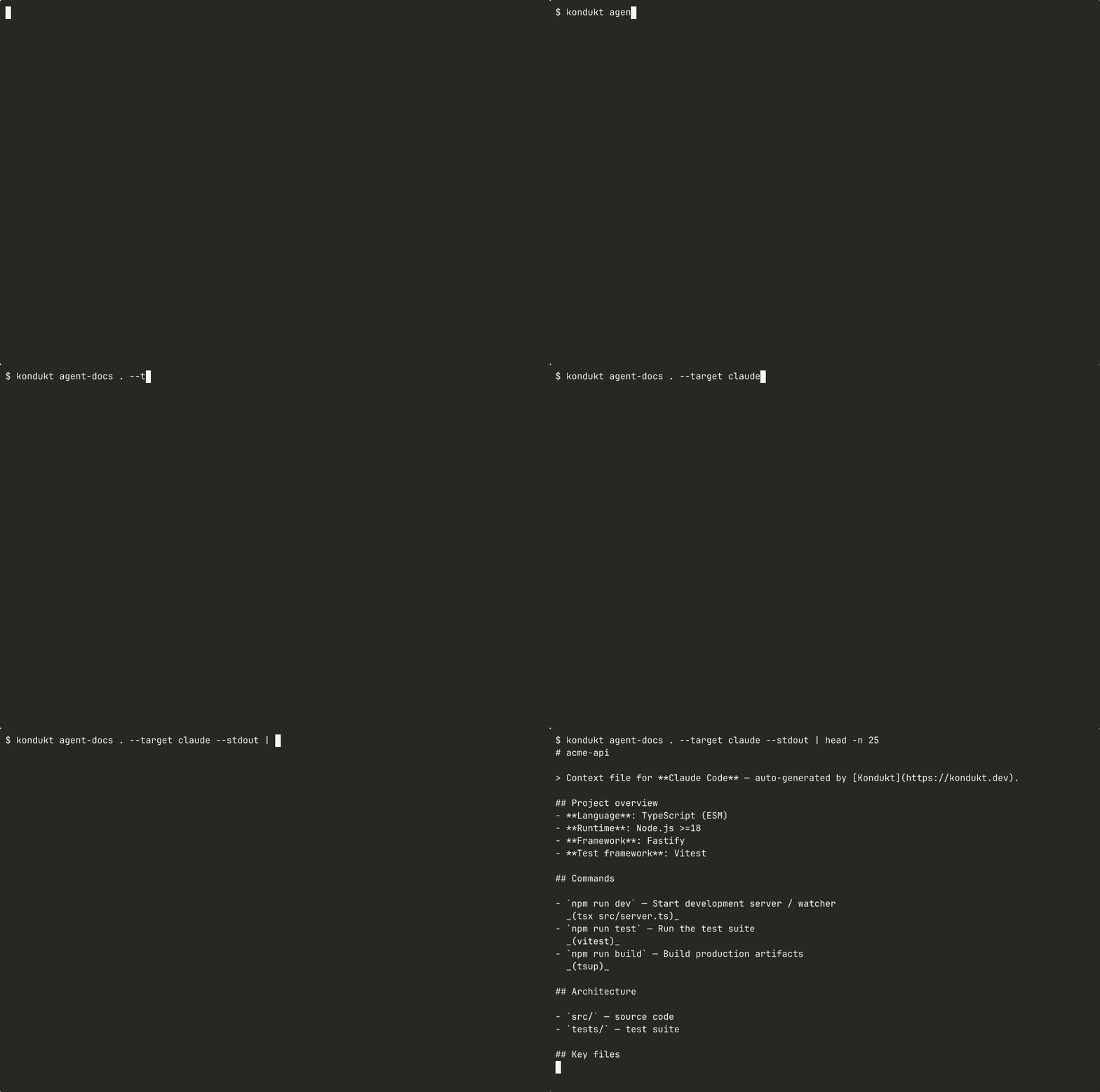
kondukt serve — run Kondukt as an MCP server
Exposes all of the above as MCP tools. Register once, use from any MCP-compatible agent.
Install
Most commands work with zero install via npx. For frequent use:
npm install -g kondukt
Or use it as a library:
npm install kondukt
import { McpConnection, SchemaValidator } from "kondukt";

const conn = new McpConnection({
  type: "stdio",
  command: "npx",
  args: ["-y", "@modelcontextprotocol/server-everything"],
});

await conn.connect();
const result = await new SchemaValidator().validate(conn);
await conn.disconnect();

console.log(result.score); // 0–100
console.log(result.issues);
Transports
Kondukt supports both transports defined by the MCP spec:
- stdio — pass the command directly:
npx kondukt test "npx -y my-server" - HTTP / SSE — pass a URL:
npx kondukt test "https://my-server.example.com/mcp"
Development
Regenerating the demo assets
./scripts/record-demo.sh                     # all scenarios
./scripts/record-demo.sh demo scaffold       # a subset
./scripts/record-demo.sh --upload demo       # also upload to asciinema.org
Requires Homebrew (installs asciinema, agg, and ffmpeg on demand). Each
scenario in scripts/scenarios/<name>.sh produces three outputs:
assets/<name>.gif— committed, embedded in this READMEassets/local/<name>.cast— asciinema source, gitignoredassets/local/<name>.mp4— H.264 fallback for Twitter/X, gitignored
Only the GIFs ship in the repo; regenerating the cast and MP4 is a local concern.
Contributing
Issues, PRs, and feedback all welcome.
If you find a bug, the fastest path is an issue with a reproducing command. If Kondukt's validator gets something wrong, that's also a bug — file it.
License
Author
How to install
Run in your terminal:
claude mcp add kondukt -- npx -y kondukt
