

About
MCP Server for ZapCap.ai
README
PyPI version MCP Server Author
NOTE: This is an unofficial implementation of MCP Server for ZapCap.
An MCP (Model Context Protocol) server that provides tools for uploading videos, creating processing tasks, and monitoring their progress through the ZapCap API.
Requirements
- uv
- ZapCap API key
You can install uv from here: https://docs.astral.sh/uv/
You can get api key from ZapCap API after registation at https://zapcap.ai/ in their platform here: https://platform.zapcap.ai/dashboard/api-key
Installation in MCP-client
Add to your MCP client mcp.json configuration (e.g., Claude Desktop, Cursor and etc.):
{
  "mcpServers": {
    "zapcap": {
      "command": "uvx",
      "args": ["zapcap-mcp-server"],
      "env": {
        "ZAPCAP_API_KEY": "your_api_key_here"
      }
    }
  }
}
Alternative Installation
uv tool install zapcap-mcp-server
Docker Installation
You can also run the MCP server in a Docker container using the pre-built image from Docker Hub:
Using pre-built image from Docker Hub:
{
  "mcpServers": {
    "zapcap": {
      "command": "docker",
      "args": [
        "run",
        "--rm",
        "--init",
        "-i",
        "--net=host",
        "-v", "/home/$USER:/host/home/$USER",
        "-e", "ZAPCAP_API_KEY=your_api_key_here",
        "bogdan01m/zapcap-mcp-server:latest"
      ],
      "env": {
        "DOCKER_CLI_HINTS": "false"
      }
    }
  }
}
Configuration
Set your ZapCap API key as an environment variable:
export ZAPCAP_API_KEY="your_api_key_here"
Usage
Demo Videos
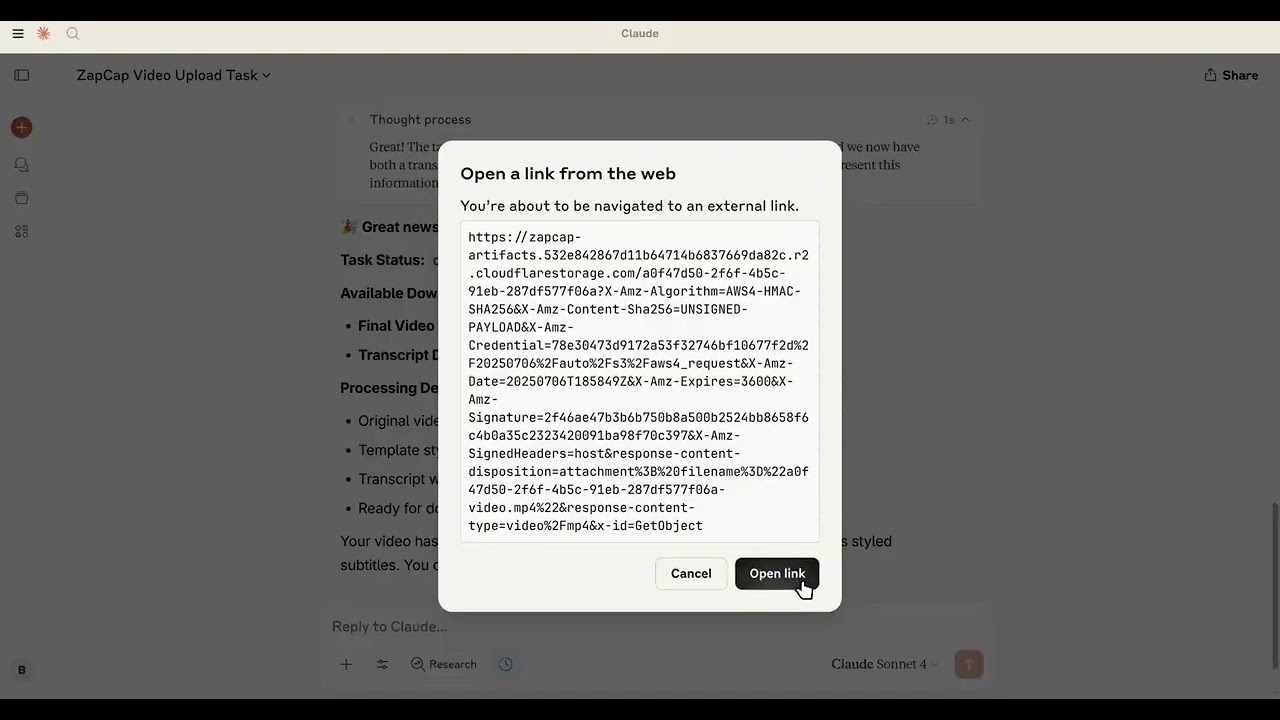
How to use:
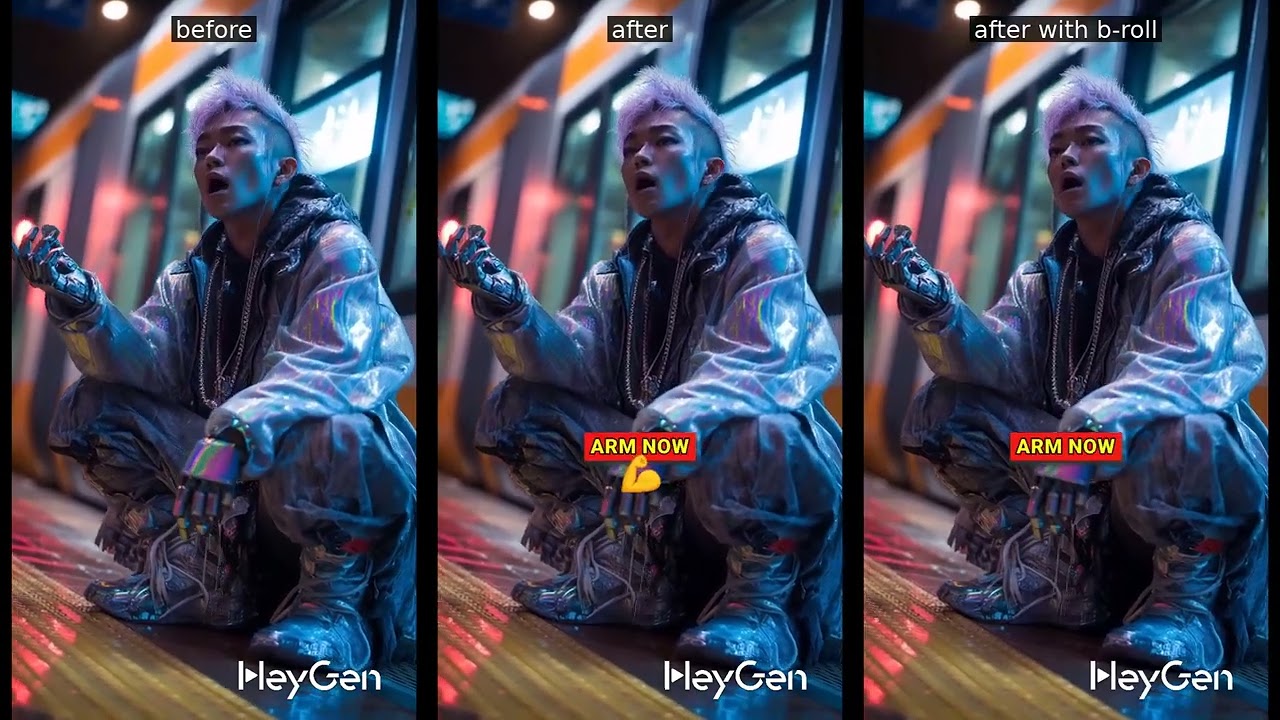
Results:
Available Tools
The server provides the following tools:
zapcap_mcp_upload_video
Upload a video file to ZapCap.
Parameters:
file_path: Path to the video file
zapcap_mcp_upload_video_by_url
Upload a video by URL to ZapCap.
Parameters:
url: URL to the video file
zapcap_mcp_get_templates
Get available processing templates from ZapCap.
zapcap_mcp_create_task
Create a video processing task with full customization options.
Parameters:
video_id: Video ID from uploadtemplate_id: Template IDauto_approve: Auto approve the task (default: true)language: Language code (default: "en")enable_broll: Enable B-roll (default: false)broll_percent: B-roll percentage 0-100 (default: 30)
Subtitle options:
emoji: Enable emoji in subtitles (default: true)emoji_animation: Enable emoji animation (default: true)emphasize_keywords: Emphasize keywords (default: true)animation: Enable subtitle animation (default: true)punctuation: Include punctuation (default: true)display_words: Number of words to display (default: 1)
Style options:
position_top: Subtitle position from top (default: 60)font_uppercase: Use uppercase font (default: true)font_size: Font size (default: 30)font_weight: Font weight (default: 900)font_color: Font color (default: "#ffffff")font_shadow: Font shadow s/m/l (default: "l")stroke: Stroke style (default: "s")stroke_color: Stroke color (default: "#000000")highlight_color_1: First highlight color (default: "#2bf82a")highlight_color_2: Second highlight color (default: "#fdfa14")highlight_color_3: Third highlight color (default: "#f01916")
zapcap_mcp_monitor_task
Monitor task progress.
Parameters:
video_id: Video IDtask_id: Task ID
Benefits Over Direct API Usage
Token Management
Unlike using curl or direct API calls where you need to manually include your API key in every request:
# Traditional curl approach - token needed every time
curl -X POST "https://api.zapcap.ai/upload" \
  -H "Authorization: Bearer your_token_here" \
  -F "[email protected]"
With this MCP server, your API key is configured once in the environment and automatically used for all operations:
{
  "env": {
    "ZAPCAP_API_KEY": "your_api_key_here"
  }
}
Natural Language Interface
Instead of constructing complex API requests with parameters, you can describe what you want:
Traditional API:
curl -X POST "https://api.zapcap.ai/tasks" \
  -H "Authorization: Bearer token" \
  -d '{
    "video_id": "abc123",
    "template_id": "viral",
    "font_size": 30,
    "highlight_color_1": "#00ff00",
    "enable_broll": true,
    "broll_percent": 40
  }'
MCP Server:
"Add green highlighted subtitles with 40% B-roll using viral template"
Type Safety & Validation
- Pydantic Integration: All parameters are validated automatically with type checking
Future Plans
Testing Integration
We're planning to add basic testing capabilities:
- API Integration Tests: Verify that ZapCap API calls work correctly
- MCP Tool Tests: Ensure all MCP tools respond properly to requests
Planned Features
- Named configurations: Save frequently used parameter combinations ("my_brand", "youtube_style")
- Template enhancement: Override template defaults with consistent brand colors/fonts
License
MIT licence
Installing Zapcap
This server has no published package — it is built from source. Open the repository and follow its README.
▸ github.com/bogdanminko/zapcap-mcp-serverFAQ
Is Zapcap MCP free?
Yes, Zapcap MCP is free — one-click install via Unyly at no cost.
Does Zapcap need an API key?
No, Zapcap runs without API keys or environment variables.
Is Zapcap hosted or self-hosted?
Self-hosted: the server runs locally on your machine via the install command above.
How do I install Zapcap in Claude Desktop, Claude Code or Cursor?
Open Zapcap on unyly.org, pick your client tab (Claude Desktop, Claude Code, Cursor) and press Install — the config is generated automatically, no JSON editing.
Related MCPs
Fetch
Web content fetching and conversion for efficient LLM usage.
AWS KB Retrieval
Retrieval from AWS Knowledge Base using Bedrock Agent Runtime.
 by modelcontextprotocol
Spring AI MCP Server
Provides auto-configuration for setting up an MCP server in Spring Boot applications.
llm-analysis-assistant
A very streamlined mcp client that supports calling and monitoring stdio/sse/streamableHttp, and can also view request responses through the /logs page. It also
 by xuzexin-hz
Compare Zapcap with
Not sure what to pick?
Find your stack in 60 seconds
Author?
Embed badge for your README
Browse similar
All ai MCPs